Onshore/Offshore Facilities

Alongside the new subsea awards, Equinor strengthened its position in the 400-million-bbl Bay du Nord development by acquiring BP’s interest in the project.
The events will be co-located 3–5 May 2027 at Reliant Park in Houston, Texas.

The supermajor said the fields are not expected to contribute meaningfully to its production profile by 2030.
-
 The steel pipe manufacturer agrees to deliver outer pipes for pipe-in-pipe flowlines for a pair of recently-announced Aker BP projects in the Norwegian Sea.
 -
Completion of the umbilicals system marks another step toward startup for the Total-operated ultradeepwater development offshore Angola.
-
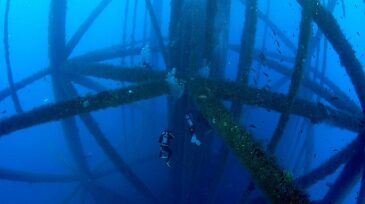
Many operators are taking a full-life-cycle approach to preparing for decommissioning—a shift borne of necessity amid cost and regulatory constraints.
-
With no money to be made, P&A is one area where operators can put aside their hyper-competitiveness to work together. Members of the recently formed PACE network discussed the virtues of collaboration at the Decommissioning and Abandonment Summit 2018.
-
Onshore development is increasing production, while investors demand greater operational efficiencies. Operators and service companies are striving to strike the balance between fiscal discipline and growing their production. How low can costs go, and for how long?
-
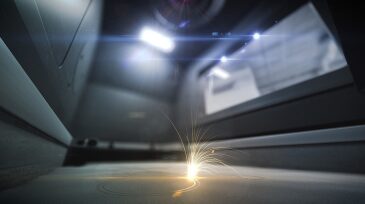
Gas turbine blades and large-scale printing machines highlight new advancements in additive manufacturing that are likely to affect the supply chain in the not-so-distant future.
-
The Constitution spar in the Gulf of Mexico has an original nameplate separation capacity of 70,000 BOPD and 200 MMscf/D of gas. Production potential from future developments is expected to exceed this limit.
-
Welcome to the Offshore Facilities feature in this month’s JPT. The three papers featured in this section were selected out of 141 submitted to SPE covering various elements of offshore facilities design, construction, installation, operation, and inspection.
-
Offshore project execution enhancement ideas are highlighted for debottlenecking, gas-hydrate-induced pipeline vibration, and the design of subsea systems for efficient startup.
-
The workflow aims to reduce the startup time of a subsea production system (SPS). A dynamic integrated model is used to adjust the scheduled SPS startup time. The model evaluates the dynamic simulation response of a large field startup by integrating a reservoir- and gathering-network model.