Production

Trafigura will purchase 100,000 metric tons of battery-grade lithium products under a decade-long take-or-pay contract valued at over $2 billion.

The 2026 Upstream Scale Guidelines establish a common workflow for field measurements, scale modeling, and risk assessment to support more consistent operational decisions.

The long-term outlook analysis says a potential shift toward new construction could push 2026 production 3% above 2025 levels.
-
 The complete paper describes the hurdles that have prevented single-trip installation of upper and lower completions in the complex world of subsea and deepwater applications and examines the processes, technologies, and risk-mitigation steps that took a concept from pilot to successful deployment.
 -
The complete paper reviews the results of gas hydrate engineering and production testing studies associated with northern Canada and Alaska.
-
About 16% of US offshore production in the Gulf of Mexico remains offline after Hurricane Laura caused mass evacuations more than a week ago.
-
The featured papers and suggested further reading summarize the current SPE literature state of the art for H2S scavenger research and development and have been selected to give readers a broad indication from both academia and industry around the world.
-
This paper describes studies that confirm that enzyme-based, environmentally preferable chemistries can be used to break polymers and mitigate H2S in various systems.
-
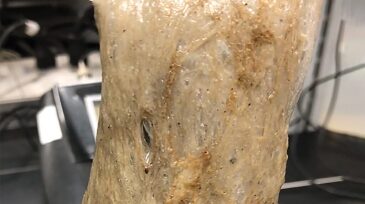
The source of gummy, damaging polymer gunk that has flowed from Oklahoma oil wells is becoming clear, and one of the lessons learned is that shale plays require petroleum engineers to learn more about chemistry.
-
Based on the early results from mass shut-ins of shale wells, it did not harm long-term production and it paid a short-term dividend with more oil flowing in the days after restarting.
-
The complete paper presents a solution that assesses tight matrices and natural fractures at a level not previously achieved. At the tight-matrix level, advanced nuclear spectroscopy is carried out with a new pulsed-neutron device that achieves simultaneous time- and energy-domain measurements.
-
Oil sands producers predicted they could reduce production by 300,000 B/D by turning down steam injection. This will test methods to reduce, rather than stop, injection to avoid the damage caused by rapid cooling in some wells.
-
For the seventh straight year, the regulatory body has found offshore operations continue to improve based on an efficiency model developed in partnership with the SPE.