Production

Trafigura will purchase 100,000 metric tons of battery-grade lithium products under a decade-long take-or-pay contract valued at over $2 billion.

The 2026 Upstream Scale Guidelines establish a common workflow for field measurements, scale modeling, and risk assessment to support more consistent operational decisions.

The long-term outlook analysis says a potential shift toward new construction could push 2026 production 3% above 2025 levels.
-
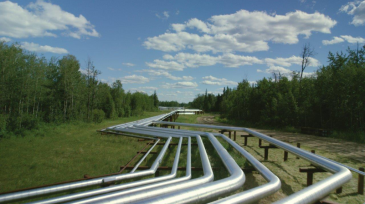
 Production of paraffinic crude presents challenges due to depressurization and cooling of crude oil during production.
 -
When oil demand vaporized, oil sands producers cut 300,000 B/D of production from wells using steam injection to produce bitumen. It is a huge test of something they have long been reluctant to do—turn down in-situ production when prices plunge.
-
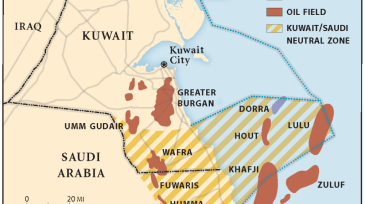
The joint oil field had been offline since 2015, due to an operational dispute.
-
A report from the Norwegian Petroleum Directorate details how production powered from shore would cut down on carbon dioxide emissions. All of the planned projects from the onshore power grid are expected by the mid-2020s.
-
The complete paper presents a large-scale work flow designed to take a vast amount of data into consideration. The work flow can be scaled for projects of any size, depending on the data available.
-
Each year at the SPE Artificial Lift Conference and Exhibition, energy professionals convene to connect, grow, and learn—and also to laud outstanding innovators in their field.
-
In an era where capital markets are hitting the brakes on funding the US shale sector, operators have increasingly pivoted from production growth to maximizing the rates of return via lower-cost wells.
-
The complete paper highlights examples of nonmetallic materials selection and qualification for upstream water-injection and producer and hydrocarbon wells and presents suggestions for future progress.
-
The complete paper presents the results of evaluation of laboratory and demonstration trials of HDPE liner to mitigate premature failures and prolong the run life of production tubing.
-
The complete paper describes an operator’s experience in confirming glass fiber-reinforced epoxy (GRE) as an effective alternative to high-grade corrosion-resistant alloys (CRA) to extend tubing life in high-velocity gas wells.