Production

This paper aims to establish a set of best practices for generating particle-size-distribution data from core samples.

Unlike traditional AI approaches that rely primarily on historical data, physics-based AI integrates physical laws, engineering expertise, and operational constraints directly into the learning process. Three recent SPE papers illustrate how this paradigm is transforming the industry through intelligent condition monitoring, virtual sensing, and autonomous production …

This research focuses on combining physics-based expert rules with machine learning to improve the detection of failure-related events in electrical submersible pumps.
-
 This study evaluates well integrity and CO2-leakage risk in wells penetrating a CO2 storage reservoir in Malaysia.
 -
This paper presents results from evaluating the rate of thermal energy that can be extracted under various completion scenarios in end-of-life oil and gas wells using a transient flow simulator.
-
Instead of insights, traditional economic yardsticks in mature fields can create surprises. Buyers, investors, and lenders need new yardsticks—besides those based on present value—in order to make profitable decisions in mature properties.
-
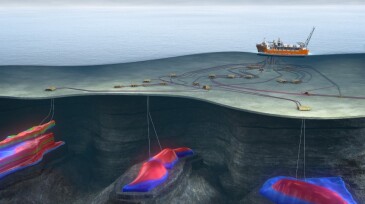
Operator also moves forward with electrification of the Njord field.
-
Boosting gas production from Israel’s Tamar offshore gas field, combined with gas from the neighboring Leviathan field, will further the ambitions of both Israel and Egypt in the Eastern Mediterranean.
-
Development of these offshore fields carries a combined price tag net to Aker BP of $19 billion.
-
A pair of innovative field development strategies are helping tame the wild, wild Permian Basin.
-
I would like to highlight the following works as promising technological developments for production and facilities: innovative measurement techniques, improvements to drilling safety, new developments in piping inspection, and a very interesting study of triangular vs. circular cross-sectional pipes.
-
This paper presents field cases of a rigless wireline logging technique that accurately locates sources of water production in cased wells with standalone sand screens in an offshore field in the Caspian Sea.
-
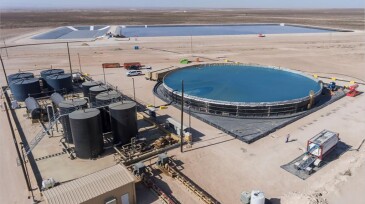
The produced water conundrum in the Permian Basin will be solved by a mix of recycling, disposal, and future breakthroughs in technology currently being studied.