Production

This paper aims to establish a set of best practices for generating particle-size-distribution data from core samples.

Unlike traditional AI approaches that rely primarily on historical data, physics-based AI integrates physical laws, engineering expertise, and operational constraints directly into the learning process. Three recent SPE papers illustrate how this paradigm is transforming the industry through intelligent condition monitoring, virtual sensing, and autonomous production …

This research focuses on combining physics-based expert rules with machine learning to improve the detection of failure-related events in electrical submersible pumps.
-
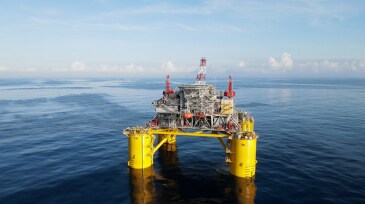
 The deepwater US Gulf of Mexico is the template for Shell's Whale development due online in 2024.
 -
State of Energy report also sees a widening role for natural gas due to robust global LNG demand.
-
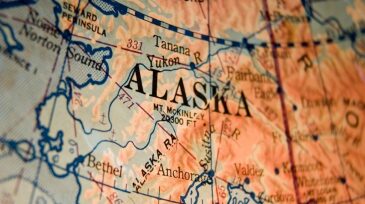
Environmental report recommends shrinking the Alaska project to three drilling sites from the five initially proposed by ConocoPhillips.
-
The authors of this paper show the migration of a CO2 plume within a depleted carbonate reservoir and the expected effects of CO2 saturation and pressure buildups during injection on time lapse 4D seismic for conformance monitoring.
-
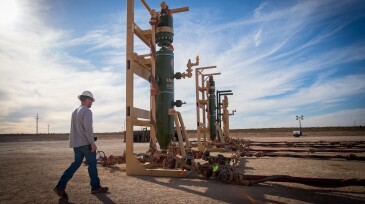
The biggest sand haul ever reported by service provider Enercorp is a reminder that proppant flowback is a mounting challenge for shale producers.
-
A big jump in the tax incentives offered for putting CO2 in the ground, hopefully forever, has set off a mad rush to sequester CO2. But is that really the best option?
-
To evaluate performance of a range of blended inhibitors, a trial was run on a North Sea produced water system which was applying monoethanolamine (MEA) phosphonate-type scale inhibitor as well as novel cleaning programs to counter a high carbonate saturation ratio in the heater. The objective was to find an improved scale inhibitor formulation that would outperform M…
-
The framework and success of future opportunities is reliant on the data used to quantify them, and this is something of which all mature fields have plenty. As they have delivered value throughout their life, the uncertainty associated with them reduces, and the new ideas discussed here come to light.
-
The authors of this paper describe a three-way coupled modeling approach that integrates dynamic, geochemistry, and geomechanics models to obtain cumulative effects of all three changes to evaluate future carbon dioxide storage.
-
The complete paper describes a combination of best practices and innovative techniques that help to provide rig-based and rigless opportunities by estimating potential and risk in a naturally fractured reservoir.