Production

This paper aims to establish a set of best practices for generating particle-size-distribution data from core samples.

Unlike traditional AI approaches that rely primarily on historical data, physics-based AI integrates physical laws, engineering expertise, and operational constraints directly into the learning process. Three recent SPE papers illustrate how this paradigm is transforming the industry through intelligent condition monitoring, virtual sensing, and autonomous production …

This research focuses on combining physics-based expert rules with machine learning to improve the detection of failure-related events in electrical submersible pumps.
-
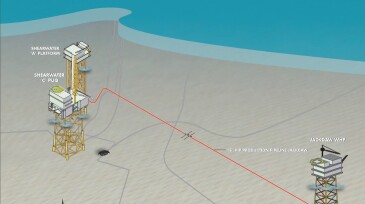
 First production from the UK North Sea gas field is expected in the second half of 2025.
 -
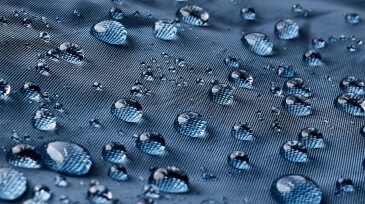
More than 1,000 pieces of oilfield equipment in the US have already been treated with a nanocoating that the company says nixes fouling problems caused by paraffins and inorganic scales.
-
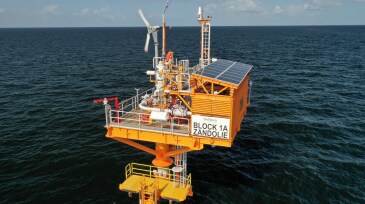
The local player completes second field in Block 1(a) off the west coast of Trinidad. The unmanned platform is completely powered by solar and wind.
-
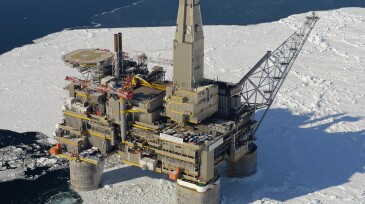
The Russian president has signed a decree that appears to nationalize the Sakhalin-2 offshore oil and gas production-sharing agreement and related LNG facilities to squeeze out its foreign partners.
-
How do you make new money from old offshore fields? The choice between investing in older assets or decommissioning them depends on oil and gas prices, the ingenuity of technical people, and the willingness of a company’s executives to hold on to older assets.
-
This paper provides a comprehensive study for offshore carbon-dioxide (CO2) storage projects, identifying critical elements for estimation, injection, containment, and monitoring of CO2 plumes.
-
The sale is subject to the closing of the acquisition by BW Energy of the 100% operating working interest in the Golfinho field from Petrobras.
-
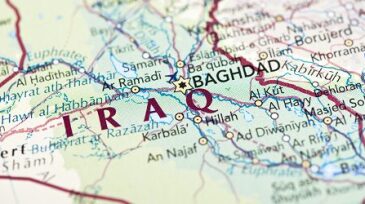
ExxonMobil's departure leaves BP and Shell as the last international oil companies in Iraq.
-
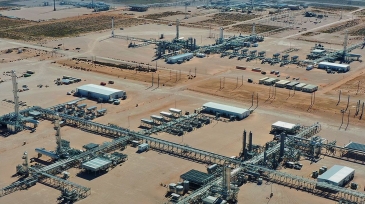
The acquisition expands Targa’s midstream natural gas processing footprint in the active Delaware Basin of New Mexico.
-
One of the newest ways to plug and abandon wells and patch casing leaks involves an alloy that flows like water.