Production

This paper aims to establish a set of best practices for generating particle-size-distribution data from core samples.

Unlike traditional AI approaches that rely primarily on historical data, physics-based AI integrates physical laws, engineering expertise, and operational constraints directly into the learning process. Three recent SPE papers illustrate how this paradigm is transforming the industry through intelligent condition monitoring, virtual sensing, and autonomous production …

This research focuses on combining physics-based expert rules with machine learning to improve the detection of failure-related events in electrical submersible pumps.
-
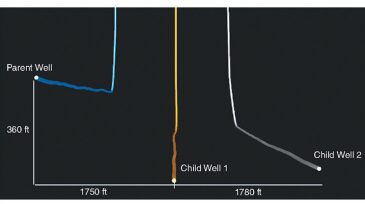
 In an era where capital markets are hitting the brakes on funding the US shale sector, operators have increasingly pivoted from production growth to maximizing the rates of return via lower-cost wells.
 -
The complete paper highlights examples of nonmetallic materials selection and qualification for upstream water-injection and producer and hydrocarbon wells and presents suggestions for future progress.
-
The complete paper describes an operator’s experience in confirming glass fiber-reinforced epoxy (GRE) as an effective alternative to high-grade corrosion-resistant alloys (CRA) to extend tubing life in high-velocity gas wells.
-
The complete paper presents the results of evaluation of laboratory and demonstration trials of HDPE liner to mitigate premature failures and prolong the run life of production tubing.
-
The complete paper presents a large-scale work flow designed to take a vast amount of data into consideration. The work flow can be scaled for projects of any size, depending on the data available.
-
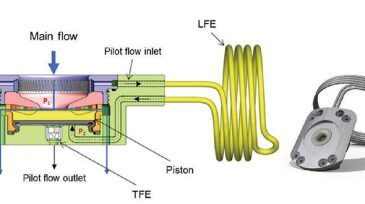
Autonomous Inflow Control Valve technology demonstrates significant benefits within first year.
-
This paper describes a coiled tubing gas lift (CTGL) technique successfully used to restart production from two pilot wells in a mature field in Pakistan that had been shut in since 2015.
-
The complete paper discusses the importance of adequate preparation and the approaches used to overcome challenges of EOR operations, including handling back-produced polymer.
-
The silver lining for those overseeing the unprecedented shut ins of tight-oil wells is the potential to acquire a wealth of reservoir data. But first, petroleum engineers need to monitor these wells and use the right analysis toolbox.
-
Two intelligence groups share similar views on how the fallout from the COVID-19 pandemic has impacted OFS companies’ valuations and operations.