Production

Sponsored
With operators under pressure to deliver more energy with fewer resources, predictable drilling performance is more important than ever. Discover how a unified digital workflow can turn drilling data into better decisions and consistent execution—providing the foundation for autonomous drilling and more predictable, profitable, and productive wells at scale.

Superior seeks to expand its international footprint through the acquisition, which is reportedly valued at $1.2 billion.

The shale revolution, the Paris Agreement, and the global pandemic each transformed energy markets. Now, industry leaders say energy pragmatism is emerging.
-
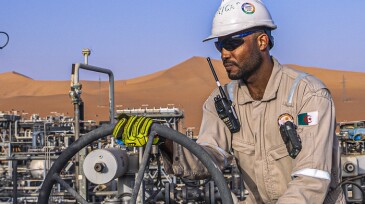
 The country’s foreign investment bid comes as Sonatrach launches its largest capital expenditure outlay—$60 billion to be spent from 2026 to 2030.
 -
ExxonMobil will retain its equity stakes in ongoing Bass Strait projects even as it hands off its operatorship responsibilities to Woodside Energy.
-
Technology and partnerships remain important, while phased approaches may supplant lengthy appraisal programs, experts said during CERAWeek.
-
Analysts weigh near‑term risks for Middle East oil and gas producers after a tentative 2‑week ceasefire between the US‑Israeli coalition and Iran.
-
Conflict‑driven price gains may be offset by higher costs, supply‑chain risks, and a limited appetite for new drilling activity.
-
This paper describes an approach to creating a digital, interconnected workspace that aligns sensor data with operational context to place the completions engineer back into a central role.
-
This paper demonstrates how the integration of multiphysics downhole imaging with machine-learning techniques provides a significant advance in perforation-erosion analysis.
-
Data centers could add up to 6 Bcf/D of US gas demand by 2030, creating a new opportunity for producers and reshaping how oil companies think about electricity supply.
-
This paper presents a workflow that leverages a multiagent conversational system to integrate data, analytics, and domain expertise for improved completion strategies.
-
Two examples from ONGC show how supervised AI-driven automation scaled well modeling across hundreds of offshore wells, saving more than 1,000 engineering hours.