R&D/innovation

SPE Journal is seeking submissions for a special issue on sustainable enhanced oil recovery (EOR), highlighting innovations that boost oil recovery while reducing CO2 emissions and environmental impact. The Call for Papers opens on 15 October 2026.

A shared digital mindset across subsurface, subsea, and drilling and wells is accelerating well planning at Vår Energi.

With funding opportunities improving, developers and researchers are focused on shortening project learning cycles and reducing uncertainty to attract more capital and speed deployment.
-
 When technology startups and oil and gas companies finally agree to run a pilot test, there are a few things both sides of the table should know before they move forward.
 -
Oil production from the Canadian oil sands is big, growing, and its future is in doubt. The problem is the cost and time required to develop new production is not competitive now. While some big international oil companies are selling out, others are focused on changing the economics of growth.
-
Things are so tough in the Canadian oil sands that competitors are considering whether to start sharing some of what they know about producing more and doing it for less. Collaboration should speed progress for everyone, but companies with something to give are looking for something in return.
-
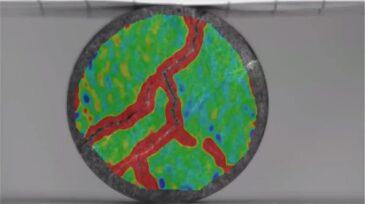
Technology that allows researchers to see stress forming inside rock samples may help unravel some of the mysteries associated with fracture behavior.
-
Getting a good well for a field test can make or break a new idea. A government backed research group in Saskatchewan is offering up to CAD 100,000 break on royalty payments to test ways to extend the life of conventional, heavy-oil fields.
-
Tyer Wind in Tunisia developed a wind turbine that mimics the flapping motion of hummingbirds' wings. Rated power output is 1 kW, using two carbon-fiber wings, each 5.25-ft long. At rated power, it operates at 450 rpm. The machine is currently undergoing open air/real conditions testing.
-
Scientists have developed oxidized carbon particles that extract radioactive metals, such as cesium and strontium, from water. They said the materials may help purify contaminated waters stored after the Fukushima nuclear power plant accident and also can trap common radioactive elements found in waterfloods from oil extraction, such as uranium, thorium, and radium,
-
A recently launched joint industry project (JIP) is working to improve petrophysical analysis methods to reduce the time and expense of characterizing tight sandstone gas reservoirs for exploration, appraisal, and production.
-
Investment in digital technologies may increase project efficiency and reduce costs. However, Technip’s chief executive officer (CEO) said it is equally important to strengthen relationships with companies along the supply chain.
-
A number of ongoing industry research projects are developing nanoparticles that work at the reservoir level and for fluid treatment. Though they may be a few years away from finalization, these efforts highlight nanotechnology’s increasingly sophisticated and growing application scope.