Reservoir characterization

Known as Arena, the collaboration aims to improve decision-making across increasingly complex reservoirs and growing volumes of subsurface data.

This study explores the carbon-capture and mineralization potential of ultramafic rock powders when exposed to flue gases generated from combustion of crude oil and mesquite-derived charcoal.

Three papers are highlighted as the primary contributions because of their broad industry relevance. They focus on improving formation particle-size characterization, expanding the application of openhole gravel packs in depleted and compartmentalized reservoirs, and advancing the understanding of capillary pressure in sand production.
-
 This paper presents the results of a comprehensive study performed to improve understanding of deep bottom-up water injection, which enabled optimizing the recovery of a heavy oil field in South Oman.
 -
This paper presents an automated calibration process, probabilistic infill well ranking, and location optimization for a major heavy oil field in Colombia with original oil in place of more than 5 million STB.
-
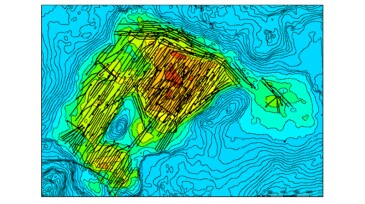
Researchers are building a comprehensive database of hundreds of salt domes to help expand subsurface hydrogen storage in the US.
-
This article presents a new data-driven analysis to locate low-frequency seismic sources, referred to as near-infrasound or infrasound sources. Combining these infrasound signals with microseismicity signals allows for better characterization and monitoring of the stimulated reservoir volume.
-
SPE Data Science and Engineering Analytics Technical Director Silviu Livescu and SPE Reservoir Technical Director Rodolfo Camacho address some of the challenges in the application of data analytics, artificial intelligence, and machine learning to several reservoir engineering problems.
-
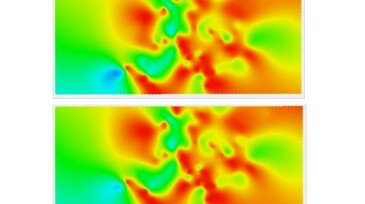
The authors of this paper introduce a physics-based method for explicit pore-pressure prediction in naturally fractured shale petroleum reservoirs.
-
The authors of this paper aim to identify the effect of various geologic controls on hydrocarbon maturation in the Delaware Basin by restoring regional cross sections and performing simulations of organic-matter maturity.
-
This work applies an appropriate transient-test theory to demonstrate the applicability of each diagnostic plot along with clearly defining the characteristic features that allow each plot to be considered “diagnostic.”
-
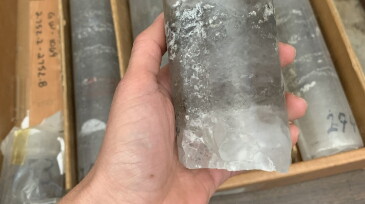
In the life cycle of a field, from exploration and production to development, as we hone our knowledge to understand the reservoir, we often explore various subdomains of formation evaluation at various scales. In this issue, we explore three such subdomains at three different scales.
-
The authors of this paper describe an approach that combined active and passive near-field hydrophone measurements in a complex near-surface area offshore Abu Dhabi.