Reservoir characterization

Known as Arena, the collaboration aims to improve decision-making across increasingly complex reservoirs and growing volumes of subsurface data.

This study explores the carbon-capture and mineralization potential of ultramafic rock powders when exposed to flue gases generated from combustion of crude oil and mesquite-derived charcoal.

Three papers are highlighted as the primary contributions because of their broad industry relevance. They focus on improving formation particle-size characterization, expanding the application of openhole gravel packs in depleted and compartmentalized reservoirs, and advancing the understanding of capillary pressure in sand production.
-
 The goal of this paper is to improve the understanding of uncertainties affecting well performance and reservoir connectivity in an offshore Malaysian field.
 -
The opening ceremony highlighted maximizing production sustainably to meet global demand, integration of simulation and optimization in a single platform with automation, and energy security.
-
Large geological models are needed for modeling the subsurface processes in geothermal, carbon-storage, and hydrocarbon reservoirs. The size of these models contributes to the computational cost of history matching, engineering optimization, and forecasting. To reduce this cost, low-dimensional representations need to be extracted. Deep-learning tools, such as autoenc…
-
This paper presents agile technologies that integrate data management, data-quality assessment, and predictive machine learning to maximize asset value using underused legacy core data.
-
The authors of this paper use a pattern-review technique in a complex brownfield as a tool to understand reservoir connectivity and dynamic fluid movements across the field.
-
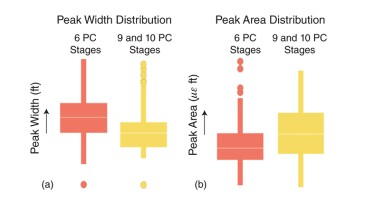
The authors of this paper describe a fiber-optic diagnostic method based on Rayleigh frequency shift that provides new insights about the characteristics of the near-wellbore region during production.
-
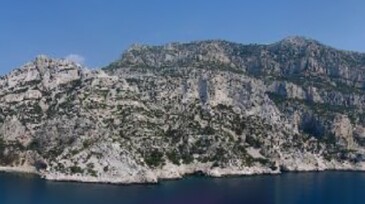
The authors of this paper describe a project that integrates carbonate stratigraphic forward models of outcropping formations and reservoir-modeling work flows.
-
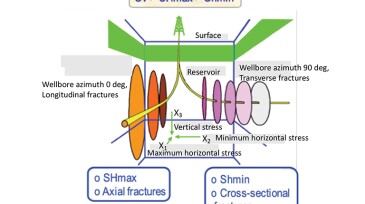
This paper presents a work flow that has been applied to crossdipole sonic data acquired in a vertical pilot well drilled in the Permian Basin.
-
As we continue to advance the capability in the laboratory environment to test downhole condition measurements experimentally, the tools we are using appear to be bridging the subsurface characterization with the production results. Continued focus on unconventionals is complemented with a renewed focus on conventional research as well.
-
The paper describes a method to match reaction kinetics from coreflooding experiments.