Reservoir characterization

Known as Arena, the collaboration aims to improve decision-making across increasingly complex reservoirs and growing volumes of subsurface data.

Three papers are highlighted as the primary contributions because of their broad industry relevance. They focus on improving formation particle-size characterization, expanding the application of openhole gravel packs in depleted and compartmentalized reservoirs, and advancing the understanding of capillary pressure in sand production.

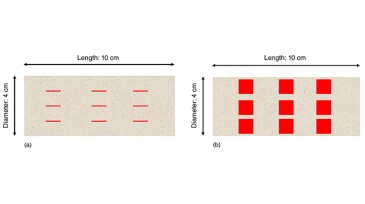
By integrating experimental and mathematical modeling approaches, this work aims to advance the understanding of sand-detachment dynamics and formation instability under varying saturation conditions.
-
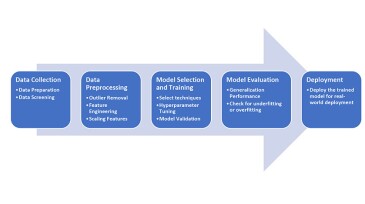
 This study aims to use machine-learning techniques to predict well logs by analyzing mud-log and logging-while-drilling data.
 -
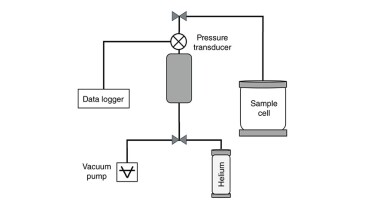
This paper introduces new methods to perform reliable permeability and saturation-dependent relative permeability measurements in organic-rich mudrock core samples using a pressure-decay setup.
-
The authors of this paper present a workflow designed to achieve maximum integration between analytical and modeling activities in carbon capture and storage projects.
-
The SPE Reservoir Technical Discipline and Advisory Committee invite their Reservoir members worldwide to participate in a new survey aimed at assessing the current state of reservoir engineering across industry and academia. Deadline is 21 July 2025.
-
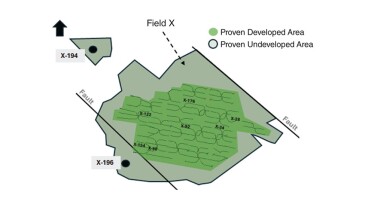
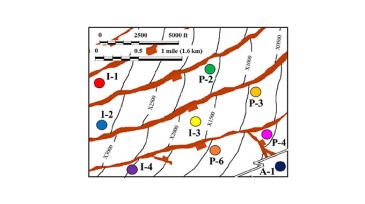
This study leverages oil-fingerprinting technology and geochemical data to evaluate the fluid connectivity between a main field and its stepout wells.
-
This paper extends an integrated two-scale continuum model that contemplates mass, momentum, and energy changes to study the acid-stimulation process in complex carbonate acid-stimulation systems with the development of fracture and vug networks.
-
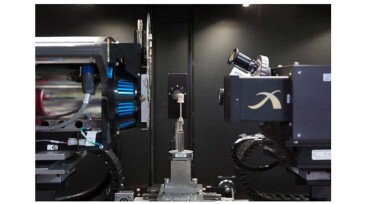
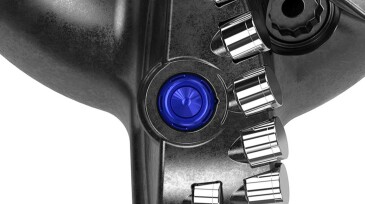
The company’s new Retina imaging system creates high-resolution borehole images at the drill bit.
-
The authors of this paper describe reservoir-fluid-geodynamics processes that explain the reasons behind varying oil compositions and properties within and across different reservoir compartments.
-
Interfacial tension keeps oil and water separate by resisting the mixing of their molecules at the surface. Learn how industry experts measure this force to diagnose fluid behavior.
-
The SPE Reservoir Advisory Committee has updated its "state of the reservoir technical discipline" document. The new edition is available for free download.