Reservoir characterization

The industry is no longer short of measurements; the real challenge is converting them into timely reservoir decisions that protect value. That challenge is becoming more urgent as the industry depends increasingly on mature fields and existing infrastructure. The selected papers show how this need is being addressed across different producing regions.

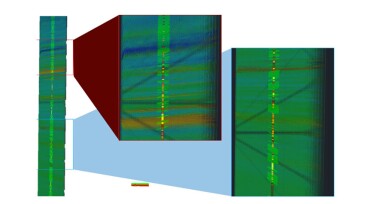
This paper presents a case study from a mature field redevelopment project where pulsed neutron logging was integrated with advanced reservoir modeling to improve the understanding of fluid-contact dynamics and optimize new horizontal well placement.

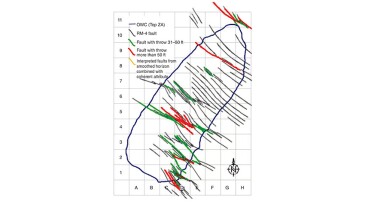
This paper aims to showcase examples of how integrated analysis of surveillance data in the Azeri-Chirag-Gunashli field has improved reservoir understanding and informed reservoir-management decisions.
-
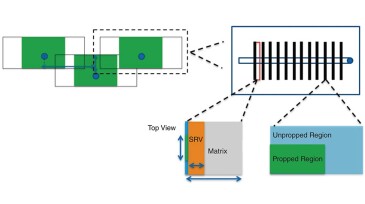
 This paper presents a complete digital workflow applied to several greenfields in the Asia Pacific region that leads to successful deep-transient-testing operations initiated from intelligent planning that positively affected field-development decisions.
 -
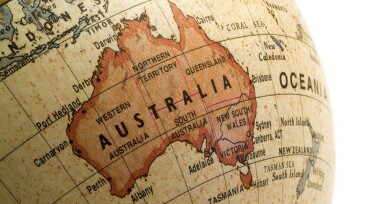
The companies have finished a seismic survey of an underexplored area of the Bonaparte Basin offshore northwest Australia.
-
This paper presents a workflow that combines probabilistic modeling and deep-learning models trained on an ensemble of physics models to improve scalability and reliability for shale and tight-reservoir forecasting.
-
This paper discusses the approach used to sectorize a mature giant carbonate reservoir located onshore Abu Dhabi for the purposes of reservoir management, offtake, and injection balancing.
-
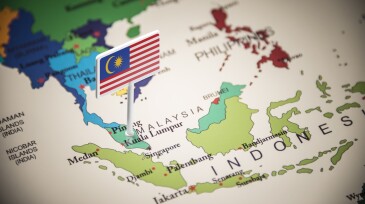
Carbon storage specialist Storegga joins Petronas and ADNOC in a joint study to strategize the build-out of Malaysia’s offshore as a regional CCS hub.
-
The Norwegian data company has launched a 3D seismic survey in the Equatorial Margin area.
-
This study compares seven imputation techniques for predicting missing core-measured horizontal and vertical permeability and porosity data in two wells drilled in the North Rumaila oil field in southern Iraq.
-
This paper describes an approach that combines rock typing and machine-learning neural-network techniques to predict the permeability of heterogeneous carbonate formations accurately.
-
This study describes the performance of machine-learning models generated by the self-organizing-map technique to predict electrical rock properties in the Saman field in northern Colombia.
-
Fundamental research conducted to derive a transport model for ideal and partitioning tracers in porous media with two-phase flow that will allow fast and efficient characterization and selection of the correct tracer to be used in field applications.