Reservoir characterization

This paper presents an experiment investigating dissolution of basaltic primary minerals and conditions favorable for secondary phase formation under deep subsurface storage conditions.

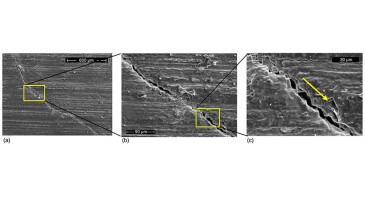
This study aims to investigate the efficacy of chemical additives strontium chloride and barium hydroxide in accelerating CO₂ trapping mechanisms, their effect on dissolution of carbonate-bearing minerals, and resulting poroelastic changes in the host rock.

This guest editorial addresses the many capacities in which oil and gas technical professionals can play a role advancing the energy technologies of tomorrow.
-
 The aim of this study is to address and discuss the reservoir engineering aspects of geological hydrogen storage.
 -
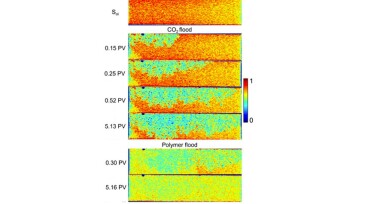
In this paper, the authors propose polymer-assisted water-alternating-gas (WAG) injection as an alternative method to reduce gas mobility while reducing the mobility of the aqueous phase and, consequently, improving WAG performance.
-
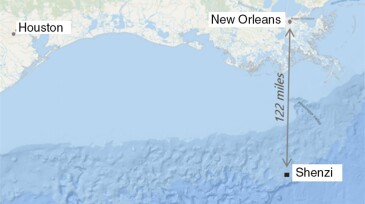
This paper describes development-plan optimization and a probabilistic uncertainty study using Latin hypercube experimental design constrained to production performance in a deepwater Gulf of Mexico field.
-
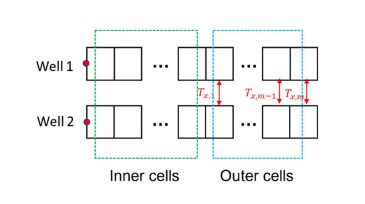
The authors of this paper propose a hybrid approach that combines physics with data-driven approaches for efficient and accurate forecasting of the performance of unconventional wells under codevelopment.
-
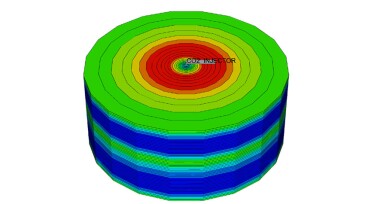
This paper develops a deep-learning work flow that can predict the changes in carbon dioxide mineralization over time and space in saline aquifers, offering a more-efficient approach compared with traditional physics-based simulations.
-
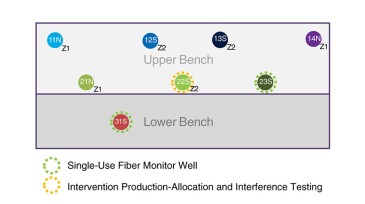
The authors integrated azimuths and intensities recorded by fiber optics and compared them with post-flowback production-allocation and interference testing to identify areas of conductive fractures and offset-well communication.
-
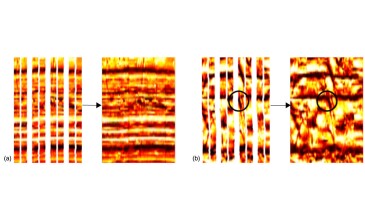
Recent technical papers have further shown the steady increase in the application of advanced seismic techniques and machine learning to mature to production “stranded” and “advantaged” hydrocarbon-bearing accumulations ; improve carbon capture, storage, and leak detection; and analyze naturally and artificially fractured reservoirs.
-
Uncertainty comes in all scales and dimensions. This challenges us to learn at all scales possible, from the fume hoods in the laboratory to magnificently exposed outcrops and through deep narrow boreholes that drill through subsurface reservoirs. The combined efforts often convert learnings to actionable intelligence.
-
The authors of this paper propose an artificial-intelligence-assisted work flow that uses machine-learning techniques to identify sweet spots in carbonate reservoirs.
-
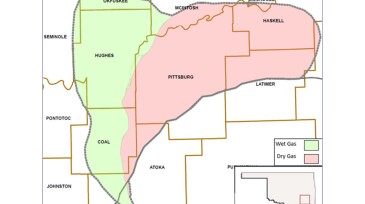
This paper describes an effort to use multiple technologies to better understand an Arkoma Basin reservoir and the interdisciplinary relationship between the reservoir’s subsurface hazards and a stimulation treatment.