Reservoir characterization

The industry is no longer short of measurements; the real challenge is converting them into timely reservoir decisions that protect value. That challenge is becoming more urgent as the industry depends increasingly on mature fields and existing infrastructure. The selected papers show how this need is being addressed across different producing regions.

This paper presents a case study from a mature field redevelopment project where pulsed neutron logging was integrated with advanced reservoir modeling to improve the understanding of fluid-contact dynamics and optimize new horizontal well placement.

This paper aims to showcase examples of how integrated analysis of surveillance data in the Azeri-Chirag-Gunashli field has improved reservoir understanding and informed reservoir-management decisions.
-
 Transitioning to a low-carbon economy demands large-scale CO2, natural gas, and hydrogen storage. In this context, the application of AI/ML technology to uncover geochemical, microbial, geomechanical, and hydraulic mechanisms related to storage and solve complicated history-matching and optimization problems, thereby enhancing storage efficiency, has been prominently …
 -
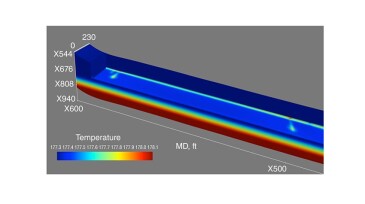
This paper discusses the concept, applications, and continual evolution of a new 3D temperature and spectral-acoustics modeling and logging approach.
-
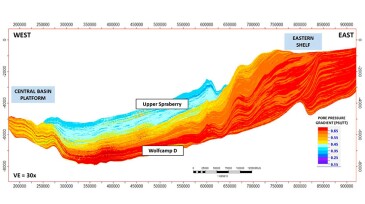
Regional pore-pressure variations in the Leonardian- and Wolfcampian-age producing strata in the Midland and Delaware basins are studied using a variety of subsurface data.
-
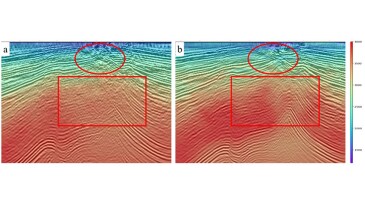
The authors of this paper present a novel joint-domain full waveform inversion framework optimizing travel-time accuracy in both data and model domains.
-
As reservoir complexity and energy-transition demands grow, the industry is developing new logging technologies, integrating multidisciplinary functions, and conducting new experiments to address new challenges. This Technology Focus highlights three papers from conventional, unconventional, and carbon-storage projects.
-
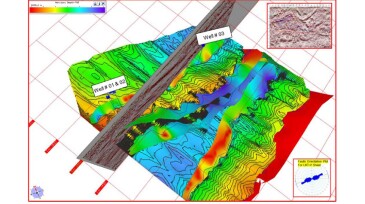
The main goal of this research work was to determine subseismic faults and fracture corridors and their characteristics, including density and orientation, for a Paleocene fractured carbonate reservoir.
-
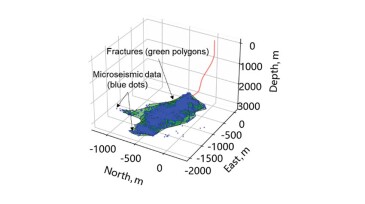
In this paper, an energy-based 3D fracture-reconstruction method is proposed to derive the complex fracture network from microseismic data in a shale gas reservoir.
-
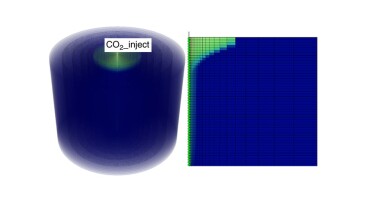
The study uses laboratory and digital core analyses of Berea sandstone to estimate petrophysical and dynamic properties for adjustment of predicted precipitation and flow reduction in reservoir simulation models of intermittent CO₂ injection with aquifer drive.
-
The authors write that, by wireline formation testing of a sandstone formation adjacent to a sand/shale laminated reservoir in the Weizhou shale-oil region of the Beibu Gulf, key reservoir information can be directly obtained.
-
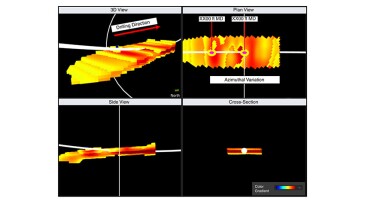
This paper presents a novel workflow for using electromagnetic resistivity-based reservoir mapping logging-while-drilling technologies for successful well placement and multilayer mapping in low-resistivity, low-contrast, thinly laminated clastic reservoirs.