Reservoir simulation

This article from the SPE Integrated Reservoir Management Technical Section (IRMTS) examines the closed-loop IRM approach, from insight to execution to learning, and the limits of technology-driven solutions.

This paper presents a case study from a mature field redevelopment project where pulsed neutron logging was integrated with advanced reservoir modeling to improve the understanding of fluid-contact dynamics and optimize new horizontal well placement.

This paper aims to showcase examples of how integrated analysis of surveillance data in the Azeri-Chirag-Gunashli field has improved reservoir understanding and informed reservoir-management decisions.
-
 The authors of this paper describe a three-way coupled modeling approach that integrates dynamic, geochemistry, and geomechanics models to obtain cumulative effects of all three changes to evaluate future carbon dioxide storage.
 -
In this study, surfactants that can alter wettability or develop ultralow interfacial tension were identified through laboratory measurements for a target carbonate reservoir.
-
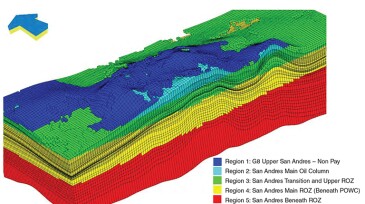
The authors of this paper present an application of a Bayesian framework for uncertainty assessment and efficient history matching of a Permian CO2 enhanced oil recovery field for reliable production forecast.
-
This paper presents results from evaluating the rate of thermal energy that can be extracted under various completion scenarios in end-of-life oil and gas wells using a transient flow simulator.
-
This paper presents a numerical simulation work flow, with emphasis on hydraulic fracture simulation, that optimizes well spacing and completion design simultaneously.
-
The authors discuss the development of a deep-learning model to identify errors in simulation-based performance prediction in unconventional reservoirs.
-
The authors of this paper compare case studies from the Bakken and the STACK plays to conclude that mineralogy, petrophysics, and reservoir-condition differences between basins cause differences in the effect of fracture-driven interactions.
-
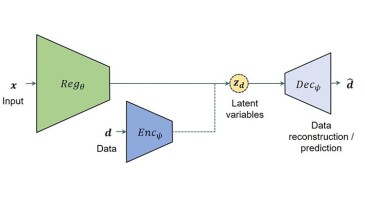
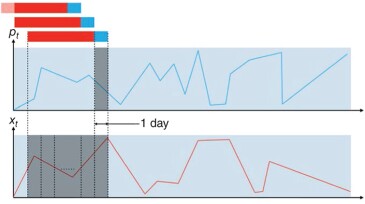
The authors of this paper propose a novel approach to data-driven modeling for transient production of oil wells.
-
This paper describes a novel distributed quasi-Newton derivative-free optimization method for reservoir-performance-optimization problems.
-
The complete paper builds on existing tools in the literature to quantify the effect of changing well spacing on well productivity for a given completion design, using a new, simple, intuitive empirical equation.