Reservoir

Industry experts at URTeC assessed more than a decade of unconventional growth while discussing where productivity gains will come from next.
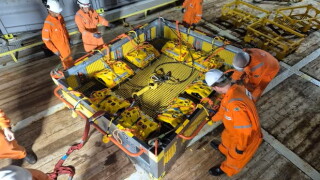
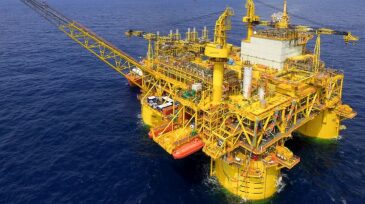
The technology has passed its first phase of qualification, with 84 nodes placed on the seafloor at a depth of 2,000 m to acquire 4D seismic data in the pre-salt Santos Basin.

Chevron and Halliburton describe how they built and deployed the fully autonomous closed-loop fracturing system that enables subsurface-driven optimization.
-
 This paper presents a newly developed model to predict the breakdown pressures in cased and perforated wells.
 -
One of my best moments is to have made the technical case for polymer flooding and to see the fruits of this several decades later. As is so often the case in our industry, my contribution stands alongside those of many others in the intervening years who have all made the EOR journey possible.
-
A thermal asset in Oman is characterized by a large-scale steam-drive/cyclic-steam-soak development project, underpinned by extensive data gathering.
-
This paper discusses an enhanced-oil-recovery (EOR) polymer-flood pilot at the Captain field in the UK North Sea during 2011–2013.
-
This paper discusses the operation of the largest offshore high-pressure water-alternating-gas (WAG) injection pilot using hydrocarbon (HC) gas, with a gas-injection capacity of approximately 100 MMscf/D, in the giant Al-Shaheen field offshore Qatar.
-
As the country pushes for higher output from its emerging unconventional sector, nature is pushing back. To get better results, operators there are increasing their reliance on technology.
-
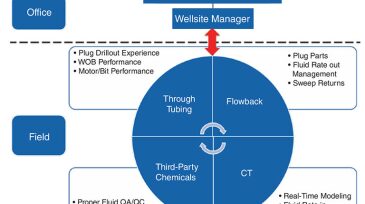
This paper presents a factory-model approach to improving CT drillout performance that has been used successfully for more than 3 years and has become standard practice.
-
This paper discusses the advantages of the in-line quench-and-temper (Q&T) process, which enhances overall CT life and reliability by producing tubing with more-uniform microstructure throughout its entire length, increased material strength, and improved bend-fatigue performance.
-
Wireline formation tests are a critical piece of the exploration and appraisal process, yet they come with a degree of uncertainty. The supermajor has tapped a new software developer to see if it can clear things up.
-
Indigo Natural Resources, Aethon Energy, and Rockcliff Energy are among the most active operators in the revived Haynesville Shale of North Louisiana and East Texas. And most people outside of the region likely have never heard of them.