Reservoir

Industry experts at URTeC assessed more than a decade of unconventional growth while discussing where productivity gains will come from next.
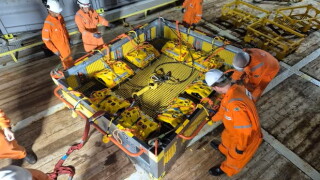
The technology has passed its first phase of qualification, with 84 nodes placed on the seafloor at a depth of 2,000 m to acquire 4D seismic data in the pre-salt Santos Basin.

Chevron and Halliburton describe how they built and deployed the fully autonomous closed-loop fracturing system that enables subsurface-driven optimization.
-
 In the clustered-development approach, the geologic dependence between prospects is combined with the aggregation of prospects to determine the economic viability of a grassroots development offshore.
 -
This paper presents the implementation of an approach for improving oil recovery by water-injection optimization using injection-control devices (ICDs) in unconventional reservoirs.
-
Proved oil and gas reserves in the US have spiked to levels not seen before, the EIA reports, and one of the main drivers is the Permian’s Wolfcamp-Bone Spring Shale.
-
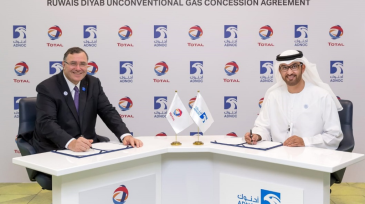
The French major will become operator of the Ruwais Diyab concession, and ADNOC says additional companies are lining up to partner on the emirate’s other unconventional areas.
-
The upcoming event will provide the shale sector with a venue to share new learnings and approaches meant to overcome one of its greatest subsurface challenges.
-
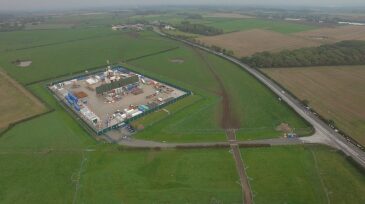
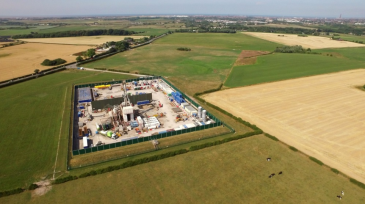
Small quantities of gas and water are flowing to the surface from the UK’s first horizontal shale well—just days after operator Cuadrilla paused injection work for a second time amid earthquakes.
-
Does better data lead to better outcomes for one or even for all? High-quality data have become a resource in themselves, to be traded and leveraged for personal gain.
-
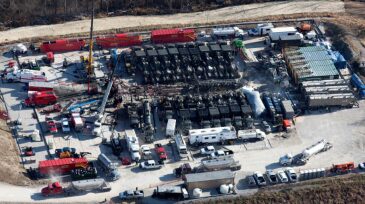
The Eagle Ford formation has produced approximately 2 billion bbl of oil during the last 7 years, yet its potential may be even greater. Using improved oil-recovery (IOR) methods could result in billions of additional barrels of production.
-
This paper evaluates the incremental benefit of water injection in a conventional gas reservoir when compared with gas compression.
-
Cuadrilla has encountered its first bumps in the road while fracturing its Preston New Road shale gas well, with two quakes already temporarily halting injection operations.