Reservoir

Industry experts at URTeC assessed more than a decade of unconventional growth while discussing where productivity gains will come from next.

The technology has passed its first phase of qualification, with 84 nodes placed on the seafloor at a depth of 2,000 m to acquire 4D seismic data in the pre-salt Santos Basin.

Chevron and Halliburton describe how they built and deployed the fully autonomous closed-loop fracturing system that enables subsurface-driven optimization.
-
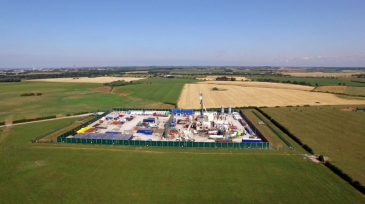
 Cuadrilla Resources will test the two wells over the next 6 months to determine how much gas it can initially recover from the Bowland Shale.
 -
BP has invested more than $100 million into nine different startup companies in the past 2 years—but only one of them wants to turn your brain into a piece of its software.
-
Technology has been key to success in exploiting unconventional resources. In recognition of the current significant interest in this field, the upcoming issue of an SPE technical journal will feature peer-reviewed papers on the rapidly evolving suite of technologies for unconventional resources.
-
This paper presents a new approach for more-accurate modeling of liquid blockage in tight oil and gas reservoirs and investigates the use of solvents for blockage removal.
-
This paper evaluates the ability of different groups of surfactants to improve oil recovery in unconventional liquid reservoirs (ULRs) by experimentally simulating the fracture treatment to represent surfactant imbibition in a ULR core fracture during a soaking flowback.
-
In this paper, the authors consider the development plan of shale gas or tight oil with multiple multistage fractured laterals in a large square drainage area that they call a “section” (usually 640 acres in the US).
-
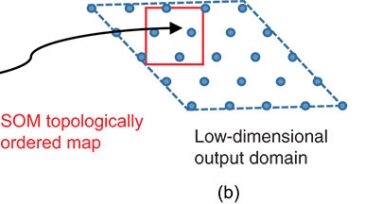
A new geostatistics modeling methodology that connects geostatistics and machine-learning methodologies, uses nonlinear topological mapping to reduce the original high-dimensional data space, and uses unsupervised-learning algorithms to bypass problems with supervised-learning algorithms.
-
Researchers from Chevron are looking into a new approach to understand the drivers of polymer hydration. How might this affect the design of mixing systems in the field, and could it affect offshore EOR applications?
-
Since its publication in 2007, the SPE Petroleum Resources Management System (PRMS) has been broadly adopted by the petroleum industry as the international standard reference for reserves and resources classification and reporting.
-
The author writes that the generally accepted Knudsen diffusion in shales is based on a mistranslation of the flow physics and may give theoretically unsound predictions of the increased permeability of shales to gas flow.