Reservoir

The events will be co-located 3–5 May 2027 at Reliant Park in Houston, Texas.

This paper presents a novel reservoir engineering/reservoir simulation approach—a data-driven interwell-connectivity model augmented as a digital twin—to predict reservoir dynamics and optimize operations in the Changqing oil field of China.

This work describes a study in which distributed data parallel training, paired with a node-local caching pipeline, enabled efficient multigraphics-processing-unit scaling for a CO₂-storage graph-neural-network surrogate while maintaining generalization.
-
 The complete paper describes a Monte Carlo simulation approach and field analysis showing that a small-scale GTL plant in North Dakota could be a profitable solution to mitigating the state’s current flaring rate of 35% of the natural gas produced.
 -
The summer of 2019 has been rife with media reports about negative gas pricing in the Permian and, given the propensity of our industry to pick a favorite horse and then all pile on it at the same time, it is not surprising when we create our own boom and bust cycles.
-
Knowing which horizon crude oil flows from and in what proportions has been a major challenge for shale producers. Increasingly, they are turning to new technology to find the answer.
-
The new numbers for the Marcellus Shale and Point Pleasant-Utica Shale represent large increases from previous USGS assessments of both formations.
-
The 16-MW solar facility in Ector County, Texas, near Odessa, powers the Goldsmith field through deployment of 174,000 photovoltaic panels.
-
Well spacing optimization is one of the more important considerations in unconventional field development.
-
The authors examine methods of adopting an aggressive approach to optimizing stimulation design to lower the break-even level of operations and evaluate the results.
-
This paper reviews the IOR/EOR technologies currently being applied to unconventional oil reservoirs.
-
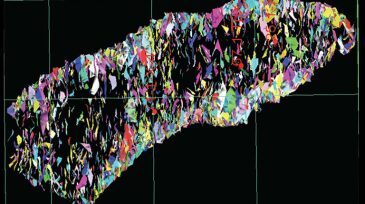
The authors present a novel data-driven tool for fast fracture identification in post-stack seismic data sets.
-
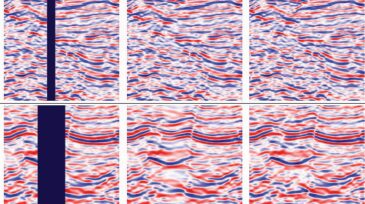
Seismic imaging provides vital tools for the exploration of potential hydrocarbon reserves and subsequent production-planning activities. The acquisition of high-resolution, regularly sampled seismic data may be hindered by physical or financial constraints.