Reservoir

A report commissioned by Havtil, the Norwegian Ocean Industry Authority, calls for better dialogue regarding pore-pressure uncertainty and higher-end drilling techniques like managed pressure drilling as methods to reduce the risk of well-control events.
The events will be co-located 3–5 May 2027 at Reliant Park in Houston, Texas.

This case study describes how edge computing and industrial internet of things platforms were deployed to automate and optimize production operations across four distinct basins.
-
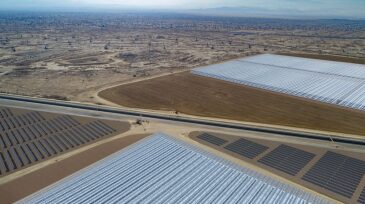
 If proven economic, solar EOR technology could represent an environmentally and energy friendly solution for California’s heavy oil producers.
 -
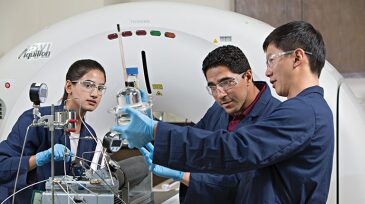
Early field tests suggest chemical treatments may be able to significantly increase production from unconventional formations.
-
The objective of the complete paper is to present an integrated work flow that can be used to build P90, mean, and P10 type wells, which represent the range of potential outcomes for the geologic subset in an unconventional resource play.
-
In the complete paper, the authors present a novel methodology to model interwell connectivity in mature waterfloods and achieve an improved reservoir-energy distribution and sweep pattern to maximize production performance by adjusting injection and production strategy on the well-control level.
-
After a drop in drilling activity in recent years, the Haynesville shale has become a hot area for natural gas production in the US, and companies are looking to bolster their positions in the area.
-
The complete paper discusses the advancements in mud-displacement simulation that overcome the limitations of the previous-generation simulator and provide a more-realistic simulation in highly deviated and horizontal wells.
-
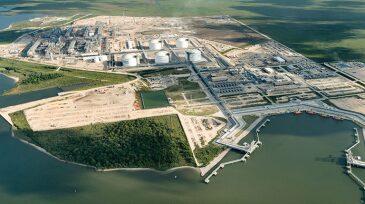
Natural gas producers should remain happy campers for the foreseeable future; they are supplying an increasing long-term demand at an increasingly stable international market price.
-
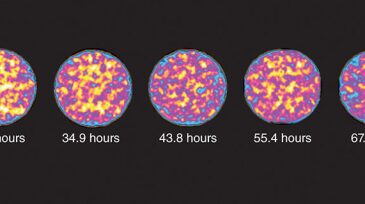
The primary objective of this study is to address all known causes of productivity declines in unconventional shale gas formations with horizontal multifractured wells and to develop a fully coupled geomechanical/flow simulation model to simulate these production conditions.
-
The promise of getting 30% more oil production from shale wells has set off a race by companies trying to see if they can replicate what EOG has done. But the big question is: Can it add enough oil to increase the industry’s low average recovery rate?
-
Currently, there are few studies on smart waterflooding in tight and very tight oil reservoirs. This work examines smart-waterflood opportunities in such reservoirs.