Reservoir

A report commissioned by Havtil, the Norwegian Ocean Industry Authority, calls for better dialogue regarding pore-pressure uncertainty and higher-end drilling techniques like managed pressure drilling as methods to reduce the risk of well-control events.

The events will be co-located 3–5 May 2027 at Reliant Park in Houston, Texas.

This work describes a study in which distributed data parallel training, paired with a node-local caching pipeline, enabled efficient multigraphics-processing-unit scaling for a CO₂-storage graph-neural-network surrogate while maintaining generalization.
-
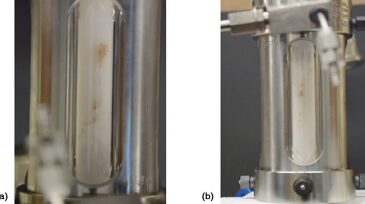
 Carbon dioxide (CO2)/water foams are of interest for mobility control in CO2 enhanced oil recovery (EOR) and as energized fracture fluids or as hybrid processes that combine aspects of both processes.
 -
There remain a number of challenges with CO2 EOR. These include gravity override, poor sweep efficiency, and economic factors.
-
Computational advances in reservoir simulation have made possible the simulation of thousands of reservoir cases in a practical time frame. This enables exhaustive exploration of subsurface uncertainty and development/depletion options.
-
With the current changes in the industry, are we seeing the demise of unconventional developments? No, clearly not. The unconventional industry is adapting to deliver the energy demands of the future despite the low oil price.
-
This paper describes how seismic reservoir integration, advanced production analysis, and accurate nanoscale and 3D full-field simulations may address profitability issues and help oil companies to be more efficient in developing unconventional portfolios.
-
This paper presents results from the analysis of the effect of in-fill drilling on parent-well performance, and describes a simplistic approach to understanding the effect of the quest for operational efficiencies and economic cycles on development strategies.
-
Because the uncertainty analysis is complex and time consuming, in this paper, a stochastic representation of the computer model, called an emulator, was constructed to quantify the reduction in the parameter input space.
-
With the easy conventional oil in Argentina having been produced, one remaining way to find new oil in existing fields is to convert fields from primary or secondary production to secondary or tertiary production, respectively.
-
The low recovery rates observed in most shale reservoirs has prompted a number of research projects to develop new enhanced oil recovery methods.
-
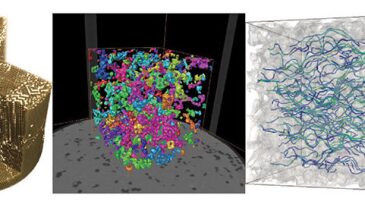
In an effort to foster collaboration in an area where there is currently very little, researchers at the University of Texas at Austin (UT) created a new web-based application for storing and sharing CT images of rocks.