Reservoir

A report commissioned by Havtil, the Norwegian Ocean Industry Authority, calls for better dialogue regarding pore-pressure uncertainty and higher-end drilling techniques like managed pressure drilling as methods to reduce the risk of well-control events.

The events will be co-located 3–5 May 2027 at Reliant Park in Houston, Texas.

This work describes a study in which distributed data parallel training, paired with a node-local caching pipeline, enabled efficient multigraphics-processing-unit scaling for a CO₂-storage graph-neural-network surrogate while maintaining generalization.
-
 This paper focuses on the aspects of proppant selection and adequate fracture-conductivity placement, with the goal of improving well productivity and cumulative recovery.
 -
This paper proposes a framework based on proxies and rejection sampling (filtering) to perform multiple history-matching runs with a manageable number of reservoir simulations.
-
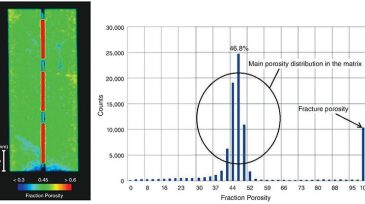
This paper provides a more straightforward method for estimating stress-dependent permeability and capillary pressure in rock fractures.
-
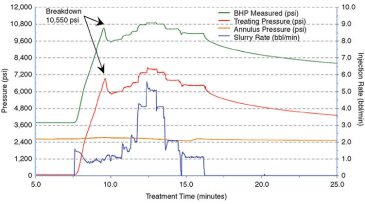
In hydraulic fracturing, the use of diagnostic-fracture-injection tests (DFITs) can provide valuable information.
-
The process of drilling a borehole is very complex, involving surface and downhole drilling systems that interact with the drilling fluid and the surrounding rocks.
-
The authors discuss the results of a pilot project to capture post-combustion CO2 for purposes of EOR.
-
Produced water from chemical floods can cause problems for separation and water treatment equipment due to the polymers and surfactants used. Challenges are greater offshore where space limitations can affect treatment options.
-
Recent experience with a newly introduced sampling-while-drilling service has shown that it is possible to make reliable downhole formation-fluid-property estimates during sampling-while-drilling operations.
-
Comprehensive formation evaluation is one of the technical focus areas that is fundamental across almost all upstream businesses.
-
This work demonstrates that molecular diffusion may be a viable oil-recovery mechanism in fractured reservoirs during injection of carbon dioxide (CO2) for enhanced oil recovery (EOR).