Reservoir

Sponsored
Effective data analysis depends on seeing connections that matter. Explore how Spotfire enables a more intuitive approach to understanding petroleum data.

The deal adds over 1,000 potential drilling locations and almost doubles oil production for Houston-based Magnolia.

Average output reached 13.6 million BOPD, extending a period of sustained growth that has kept the US at the forefront of global oil production.
-
 This paper explains that the discovery of specific pressure trends, combined with an unconventional approach for analyzing gas compositional data, enables the detection and prediction of paraffin deposition at pad level and in the gathering system.
 -
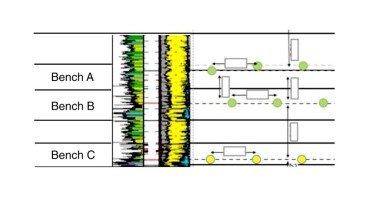
The aim of this study is to incorporate detailed geological, petrophysical, and hydraulic fracturing models to better predict and mitigate the effects of interbench interactions.
-
This paper describes a study to design and implement an enhanced oil recovery project via huff ’n’ puff using Y-grade injectant.
-
The objective of this paper is to apply a developed workflow to determine the propped hydraulic fracture geometry in a horizontal multistage fractured well, incorporating production, pressure, and strain data.
-
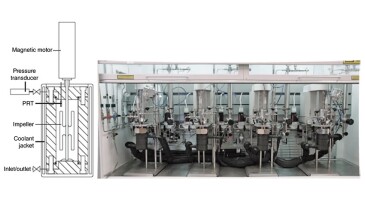
This paper presents an approach to subsea hydrate-risk management based on the understanding that some crudes have induction properties that delay hydrate formation even when the pressure and temperature conditions reach the hydrate thermodynamic region.
-
This study compares water-based chemicals including surfactants, nanoparticles, and ketones that can be used for enhancing the oil recovery of shale-oil reservoirs.
-
Entrepreneurial mindsets with the motivation to explore new materials, not limited to focusing on traditional hydrocarbon gas, carbon dioxide, and chemicals such as polymer and surfactant, are becoming more important for broadening prospects beyond the conventional EOR scene.
-
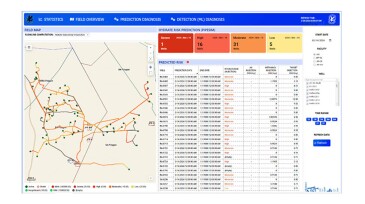
This paper discusses a comprehensive hybrid approach that combines machine learning with a physics-based risk-prediction model to detect and prevent the formation of hydrates in flowlines and separators.
-
Operators from across the region met in Muscat to share how lessons from pilot programs are shaping cost, scale, and technology priorities across the region.
-
A collaboration between a large independent and a technology developer used low-cost interventions to optimize production from unconventional wells.