Reservoir

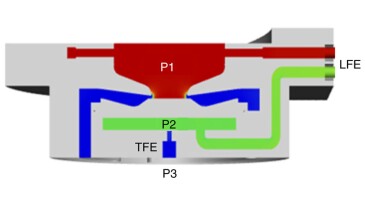
This paper documents the testing, integration, and field deployment of a metal expandable packer used as an openhole toe isolation plug in a deepwater well under high-pressure, high-temperature conditions.

Three papers are highlighted as the primary contributions because of their broad industry relevance. They focus on improving formation particle-size characterization, expanding the application of openhole gravel packs in depleted and compartmentalized reservoirs, and advancing the understanding of capillary pressure in sand production.

This paper aims to establish a set of best practices for generating particle-size-distribution data from core samples.
-
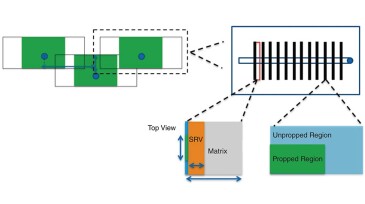
 This paper describes the qualification of a multilayer, open-cell matrix polymer system for the first horizontal deployment in an offshore gas well.
 -
This paper describes installation of autonomous inflow control valves in the Bretaña Norte field in Peru, enabling effective water control even though the trial well was placed in the flank, close to the oil/water contact.
-
This paper presents a workflow that combines probabilistic modeling and deep-learning models trained on an ensemble of physics models to improve scalability and reliability for shale and tight-reservoir forecasting.
-
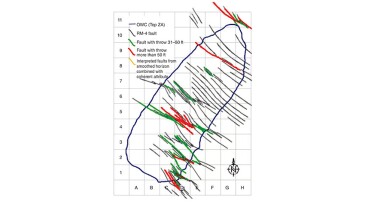
This paper discusses the approach used to sectorize a mature giant carbonate reservoir located onshore Abu Dhabi for the purposes of reservoir management, offtake, and injection balancing.
-
Oil and gas leaders identified the upcoming US presidential election and economic uncertainty as significant drivers of their decision making for 2025.
-
Over the past 75 years, drillers have gone from the Stone Age to the Space Age when it comes to technological improvements in well construction methods. Yesterday’s crude wood and iron drilling techniques have given way to today’s video game-inspired controls and robotic assistance—much of which migrated from offshore applications. These advancements have driven costs…
-
Shale Ingenuity’s first pilot used common natural gas liquids to boost daily output 30-fold from a low-producing horizontal well in Texas.
-
The Energy & Environmental Research Center in North Dakota outlines the difficulty that the oil and gas industry faces in pinpointing sources of H2S production.
-
A new plan to secure electricity for the powerhouse of Texas oil and gas will cost billions of dollars to achieve.
-
New names and new deals continue to reshape the US shale sector.