Reservoir

Three papers are highlighted as the primary contributions because of their broad industry relevance. They focus on improving formation particle-size characterization, expanding the application of openhole gravel packs in depleted and compartmentalized reservoirs, and advancing the understanding of capillary pressure in sand production.

This paper aims to establish a set of best practices for generating particle-size-distribution data from core samples.

This paper discusses the successful execution of two openhole gravel-pack completions in two Gulf of Mexico fields with depleted reservoirs.
-
 This paper describes a hydraulic fracturing pilot project using a technique that generates higher fracture conductivity to reduce the drawdown during production and improve connection through laminations.
 -
This paper presents a case study of a North African oil field producing from two Ordovician sands with differing permeabilities where significant benefit was achieved by fracture stimulating one or both intervals in two wells.
-
This paper details a successful pilot to improve long-term well performance using acid stimulation aided by a tailored metal oxide nanoparticle-based fluid in the Wolfcamp A formation.
-
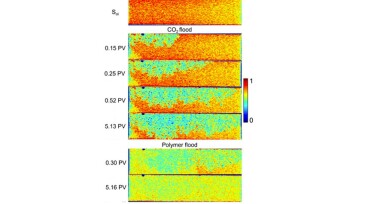
In this paper, the authors propose polymer-assisted water-alternating-gas (WAG) injection as an alternative method to reduce gas mobility while reducing the mobility of the aqueous phase and, consequently, improving WAG performance.
-
The authors of this paper study the effect of solids particles on oil/water separators and on produced-water treatment.
-
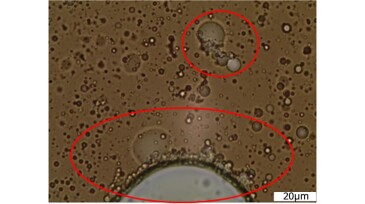
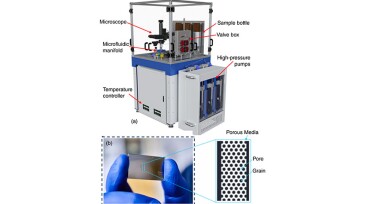
The authors present an efficient microfluidic platform to measure high-quality minimum miscibility pressure data of CO2 with various impurities faster and easier.
-
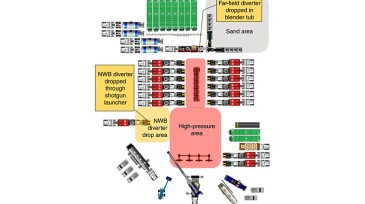
The authors of this paper describe a project in which far-field diverters were pumped to mitigate wellbore sanding and production loss in existing parent wells.
-
The EOR scene has evolved as well. Low-salinity waterflooding, originally thought to apply only in certain sandstone reservoirs, appears to be able to unlock additional reserves also for some carbonate formations, although the fundamental mechanisms are different.
-
Engineers desperately need an alternative to acid placement through pipe, coiled tubing, or bullheading. For example, propellants have been around for years; however, their performance has not quite met the hype. Nevertheless, several case histories have been authored to suggest their efficacy; historically, some treatments have even been wildly successful.
-
The exploration and extraction of hydrocarbons from tight or shale formations have revolutionized the global energy landscape, unlocking vast oil and gas reserves previously considered inaccessible. This article intends to explore the complexities of hydrocarbon extraction from tight and shale reservoirs.