Reservoir

This paper aims to establish a set of best practices for generating particle-size-distribution data from core samples.

This paper discusses the successful execution of two openhole gravel-pack completions in two Gulf of Mexico fields with depleted reservoirs.

By integrating experimental and mathematical modeling approaches, this work aims to advance the understanding of sand-detachment dynamics and formation instability under varying saturation conditions.
-
 Geochemical parameters such as total organic carbon (TOC) provides valuable information to understand rock organic richness and maturity and, therefore, optimize hydrocarbon exploration. This article presents a novel work flow to predict continuous high-resolution TOC profiles using machine learning.
 -
The US onshore business is looking flat at the moment, though these sorts of predictions are prone to sudden shifts.
-
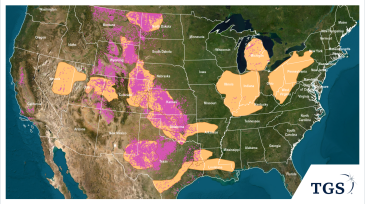
SponsoredIn a partnership with the American Institute of Formation Evaluation, TGS is now the only US data vendor offering report-sourced drillstem tests, available through TGS Well Data Analytics.
-
Dos Caminos joint venture additions will be capable of delivering 2.0 Bcf/D of natural gas.
-
Private-equity producer adds over 160,000 acres in Wyoming’s Powder River Basin oil play.
-
Artificial intelligence (AI) and machine learning (ML) technologies have rapidly progressed and have significantly affected traditional reservoir engineering, bringing innovative methodologies to reservoir simulations. However, it is essential to understand that these AI and ML technologies are only as effective and trustworthy as the data they are trained on.
-
This paper describes a work flow that integrates data analysis, machine learning, and artificial intelligence to unlock the potential of large relative permeability databases.
-
A decade ago, SPE defined key R&D and technology challenges for the industry. To address the more uncertain environment of the 2020s and beyond, we have updated the grand challenges via a January 2023 SPE workshop.
-
The objective of this study was to establish an efficient optimization work flow to improve vertical and areal sweep in a sour-gas injection operation, thereby maximizing recovery under operation constraints.
-
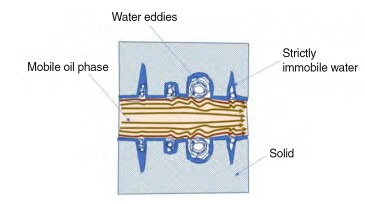
The objective of this paper is to present a fundamentals-based model of three-phase flow consistent with observation that avoids the pitfalls of conventional models such as Stone II or Baker’s three-phase permeability models.