Reservoir

Chevron and Halliburton describe how they built and deployed the fully autonomous closed-loop fracturing system that enables subsurface-driven optimization.

This article from the SPE Integrated Reservoir Management Technical Section (IRMTS) addresses decision timing across the reservoir cycle.

BP said it expects to keep the Azeri-Chirag-Gunashli (ACG) project in production into the 2040s by tapping into separate nonassociated gas reservoirs.
-
 As reservoir complexity and energy-transition demands grow, the industry is developing new logging technologies, integrating multidisciplinary functions, and conducting new experiments to address new challenges. This Technology Focus highlights three papers from conventional, unconventional, and carbon-storage projects.
 -
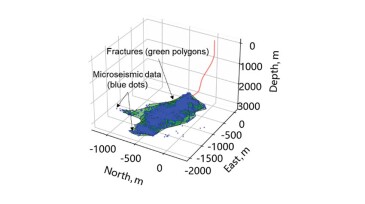
In this paper, an energy-based 3D fracture-reconstruction method is proposed to derive the complex fracture network from microseismic data in a shale gas reservoir.
-
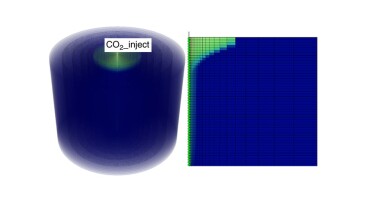
The study uses laboratory and digital core analyses of Berea sandstone to estimate petrophysical and dynamic properties for adjustment of predicted precipitation and flow reduction in reservoir simulation models of intermittent CO₂ injection with aquifer drive.
-
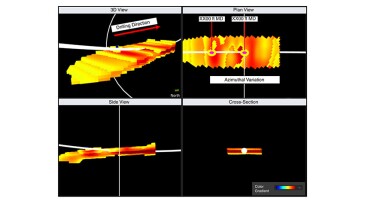
This paper presents a novel workflow for using electromagnetic resistivity-based reservoir mapping logging-while-drilling technologies for successful well placement and multilayer mapping in low-resistivity, low-contrast, thinly laminated clastic reservoirs.
-
Diversified Energy announces its largest deal yet to buy private equity-owned Maverick Natural Resources.
-
A numerical simulation study based on experimental data of 2D and 3D models is presented to examine immiscible fingering during field-scale polymer-enhanced oil recovery.
-
This selection of cutting-edge articles spotlights how experimental concepts are now driving cost-saving strategies in unconventional development. It’s a reminder that innovation often comes from creative thinking, not just new tools or tech partnerships.
-
Rystad Energy and Wood Mackenzie highlight key factors shaping the balancing act in the upstream oil market.
-
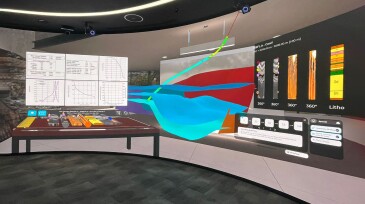
Virtual reality and related visualization technologies are helping reshape how the industry views 3D data, makes decisions, and trains personnel.
-
CO₂ enhanced oil recovery (EOR) provides an attractive and commercially established technique to store CO₂ underground. EOR modeling is crucial because complex simulation is required to predict the behavior of CO₂ and its interaction with the oil and reservoir rock.