Reservoir

Coreflood experiments reveal that alkali significantly reduces viscosity loss in polyacrylamide flooding systems by minimizing adsorption and improving polymer stability under shear stress. The findings position viscosity retention as a key screening criterion for successful alkali-polymer enhanced-oil-recovery applications.

This SPE technical section editorial synthesizes six technical themes shaping CO2 transport and storage and interprets them through a petroleum engineering capability lens.

The UAE project is expected to produce up to 345 MMscf/D by 2029, with expansion potential to 1 Bcf/D.
-
 Secondary and tertiary efforts are critical for sustaining the productive lives of unconventional plays.
-
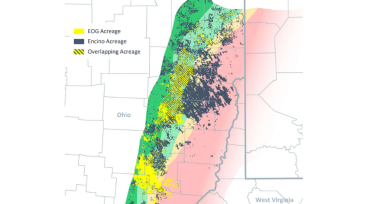
Viper Energy is acquiring Sitio Royalties Corp. and its more than 25,000 net acres of royalty interests across major US shale plays.
-
Extensive acreage overlap and existing operational collaboration drove the acquisition decision.
-
Best practices are not static; they evolve alongside advancements that redefine what is achievable.
-
This paper discusses the effect of injected-polymer viscosity on various aspects of a project, from recovery to surface facilities, including both theoretical arguments and practical field experience—which do not always align.
-
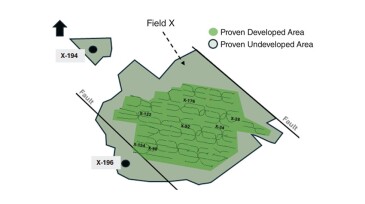
This study leverages oil-fingerprinting technology and geochemical data to evaluate the fluid connectivity between a main field and its stepout wells.
-
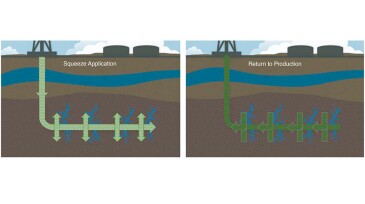
This paper provides details of a pilot study conducted on multiple wells, showcasing the potential of a novel biotechnology in Bakken enhanced oil recovery.
-
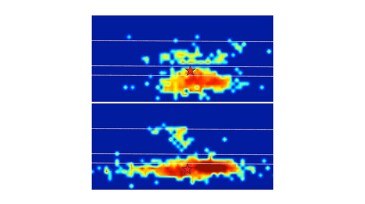
In this work, microseismic observations are integrated with strain and other observations to investigate the microseismic response in relation to the underlying hydraulic fracture geometry for different rock types.
-
This year’s Acidizing feature presents three SPE conference papers that discuss an important battlefront of enhanced production—carbonate reservoirs, those plays whose heterogeneity, reactivity, and flow behavior pose challenges that remain comparatively little-understood, despite the industry’s intensified efforts to maximize their output.
-
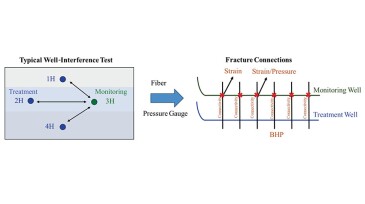
This work proposes a method to interpret far-field strain-change and pressure data to quantify fracture connectivity and properties at the cluster level.