Reservoir

Coreflood experiments reveal that alkali significantly reduces viscosity loss in polyacrylamide flooding systems by minimizing adsorption and improving polymer stability under shear stress. The findings position viscosity retention as a key screening criterion for successful alkali-polymer enhanced-oil-recovery applications.

This SPE technical section editorial synthesizes six technical themes shaping CO2 transport and storage and interprets them through a petroleum engineering capability lens.

The UAE project is expected to produce up to 345 MMscf/D by 2029, with expansion potential to 1 Bcf/D.
-
 The first acid job dates to 1895. Challenges remain, however, when it comes to lithology, coverage, penetration, and management of reaction products. These themes remain a focus for stimulation engineers.
-
The paper describes the development of an alkaline/surfactant/polymer formulation for the Mangala field in India, which involved more than 30 corefloods.
-
In this paper, a comparison is presented of the range of production outcomes for Clair Phase 1 and Clair Ridge, including the potential downsides of relying on natural fractures.
-
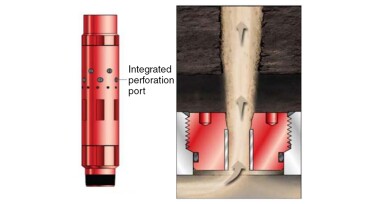
A dissolvable collet field tested in an unconventional completion led to an average running time of 32 minutes per stage in a vertical section and 19 minutes per stage in the horizontal section.
-
In Part 2 of a series of articles, the author focuses on generating a connection between the problem types and various methods of trying to solve these problems.
-
The authors of this paper describe an underbalanced coiled-tubing drilling campaign in the operator’s onshore fields using a closed-loop system design.
-
The authors describe a casing-leak-repair alternative to allow continued hydraulic fracturing of an unconventional formation.
-
The authors describe coiled tubing operations that used a riser on a monohulled vessel already performing riserless interventions.
-
This paper presents a novel mathematical model for design and evaluation of fluoroboric acid treatments that takes into account the chemical kinetics and equilibrium aspects of important reactions and fluid flow inside the reservoir rock.
-
Artificial intelligence (AI) tools have been used in geological survey methods for many years. Gaining insight into the scale and trends of this implementation could assist surveyors in making informed decisions about buying or developing new technologies.