Reservoir

Coreflood experiments reveal that alkali significantly reduces viscosity loss in polyacrylamide flooding systems by minimizing adsorption and improving polymer stability under shear stress. The findings position viscosity retention as a key screening criterion for successful alkali-polymer enhanced-oil-recovery applications.

This SPE technical section editorial synthesizes six technical themes shaping CO2 transport and storage and interprets them through a petroleum engineering capability lens.

The UAE project is expected to produce up to 345 MMscf/D by 2029, with expansion potential to 1 Bcf/D.
-
 This study describes application of the iterative ensemble Kalman smoother application to a low-permeability coalbed methane field in Australia.
-
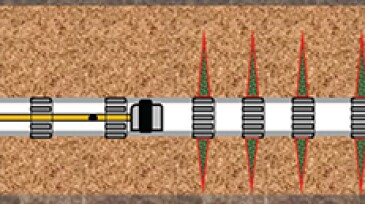
This paper will cover the most-common types of horizontal multistage fracturing completion systems, with a primary focus on unconventionals.
-
Heavy oils are characterized by high density, high viscosity, and high-heavy-fraction components. Because of high viscosity and lower API gravity than conventional crude oil, primary recovery of some of these crude oil types requires thermal stimulation of the reservoirs.
-
New research from Hess offers compelling evidence that two layers of tight rock can be treated as one and how passive wells can become oil producers.
-
This paper describes how a better understanding of the connection between the well and the reservoir through use of fiber-optic sensors can improve reservoir simulation models, decision-making, and well-performance evaluation.
-
This work evaluates and compares the performance of rate normalization and pressure deconvolution for both synthetic and tight-oil examples.
-
The authors describe an approach to achieve reliable estimation of field gas initially in place.
-
In this study, the application of electrical resistance heating on multilateral wells is studied to illustrate the enhanced physical and economic benefits of the method.
-
Schlumberger announced that ConocoPhillips will use its DELFI platform to move its data to the cloud.
-
The combined company will control almost 1 million acres in the Williston Basin and daily production over 165,000 BOE/D.