Reservoir
This study demonstrates how routinely acquired downhole temperature data allows for direct estimation of fluid saturations and delivers more accurate reservoir volume assessments, particularly in aquifer-supported systems.

Sponsored
Effective data analysis depends on seeing connections that matter. Explore how Spotfire enables a more intuitive approach to understanding petroleum data.

The deal adds over 1,000 potential drilling locations and almost doubles oil production for Houston-based Magnolia.
-
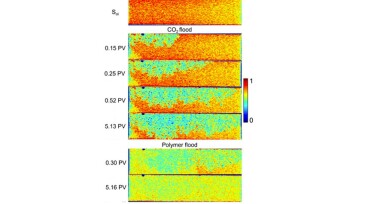
 In this paper, the authors propose polymer-assisted water-alternating-gas (WAG) injection as an alternative method to reduce gas mobility while reducing the mobility of the aqueous phase and, consequently, improving WAG performance.
 -
The authors of this paper study the effect of solids particles on oil/water separators and on produced-water treatment.
-
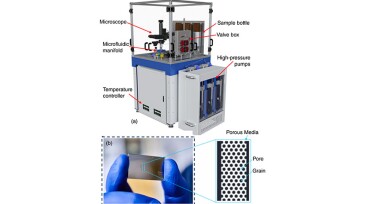
The authors present an efficient microfluidic platform to measure high-quality minimum miscibility pressure data of CO2 with various impurities faster and easier.
-
This study introduces a detailed model to capture the physics and chemistry of acid flow in complex horizontal wells completed in carbonate formations.
-
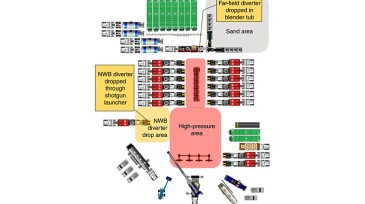
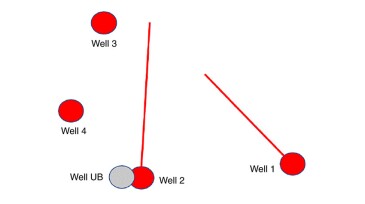
The authors of this paper describe a project in which far-field diverters were pumped to mitigate wellbore sanding and production loss in existing parent wells.
-
The EOR scene has evolved as well. Low-salinity waterflooding, originally thought to apply only in certain sandstone reservoirs, appears to be able to unlock additional reserves also for some carbonate formations, although the fundamental mechanisms are different.
-
Engineers desperately need an alternative to acid placement through pipe, coiled tubing, or bullheading. For example, propellants have been around for years; however, their performance has not quite met the hype. Nevertheless, several case histories have been authored to suggest their efficacy; historically, some treatments have even been wildly successful.
-
This paper describes the application of an underbalanced coiled tubing technology in tight sandstones, using an integrative approach that incorporates petrophysical, geophysical, and reservoir engineering data.
-
The exploration and extraction of hydrocarbons from tight or shale formations have revolutionized the global energy landscape, unlocking vast oil and gas reserves previously considered inaccessible. This article intends to explore the complexities of hydrocarbon extraction from tight and shale reservoirs.
-
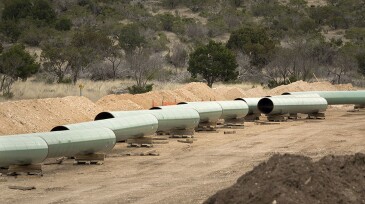
Rising natural gas production plus not enough takeaway capacity equals one big headache for west Texas producers