Reservoir

As Egypt’s largest oil and gas investor, Eni is ramping up its 2026–2027 drilling campaign with new investments cross the Mediterranean offshore, Nile Delta, Western Desert, and offshore Sinai to strengthen the country’s role as a regional gas and LNG export hub.

This paper presents an experiment investigating dissolution of basaltic primary minerals and conditions favorable for secondary phase formation under deep subsurface storage conditions.

This study aims to investigate the efficacy of chemical additives strontium chloride and barium hydroxide in accelerating CO₂ trapping mechanisms, their effect on dissolution of carbonate-bearing minerals, and resulting poroelastic changes in the host rock.
-
 The Eagle Ford formation has produced approximately 2 billion bbl of oil during the last 7 years, yet its potential may be even greater. Using improved oil-recovery (IOR) methods could result in billions of additional barrels of production.
 -
This paper evaluates the incremental benefit of water injection in a conventional gas reservoir when compared with gas compression.
-
Does better data lead to better outcomes for one or even for all? High-quality data have become a resource in themselves, to be traded and leveraged for personal gain.
-
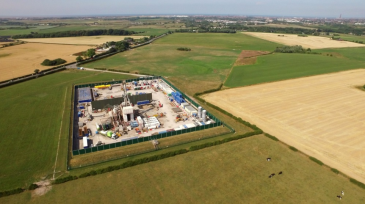
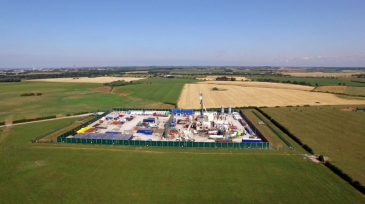
Cuadrilla has encountered its first bumps in the road while fracturing its Preston New Road shale gas well, with two quakes already temporarily halting injection operations.
-
Cuadrilla Resources will test the two wells over the next 6 months to determine how much gas it can initially recover from the Bowland Shale.
-
This paper evaluates the ability of different groups of surfactants to improve oil recovery in unconventional liquid reservoirs (ULRs) by experimentally simulating the fracture treatment to represent surfactant imbibition in a ULR core fracture during a soaking flowback.
-
In this paper, the authors consider the development plan of shale gas or tight oil with multiple multistage fractured laterals in a large square drainage area that they call a “section” (usually 640 acres in the US).
-
This paper presents a new approach for more-accurate modeling of liquid blockage in tight oil and gas reservoirs and investigates the use of solvents for blockage removal.
-
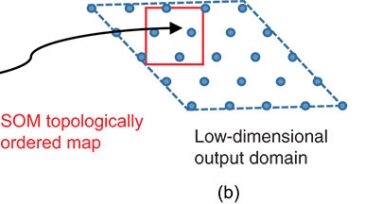
A new geostatistics modeling methodology that connects geostatistics and machine-learning methodologies, uses nonlinear topological mapping to reduce the original high-dimensional data space, and uses unsupervised-learning algorithms to bypass problems with supervised-learning algorithms.
-
Technology has been key to success in exploiting unconventional resources. In recognition of the current significant interest in this field, the upcoming issue of an SPE technical journal will feature peer-reviewed papers on the rapidly evolving suite of technologies for unconventional resources.