Reservoir

As Egypt’s largest oil and gas investor, Eni is ramping up its 2026–2027 drilling campaign with new investments cross the Mediterranean offshore, Nile Delta, Western Desert, and offshore Sinai to strengthen the country’s role as a regional gas and LNG export hub.

The industry is no longer short of measurements; the real challenge is converting them into timely reservoir decisions that protect value. That challenge is becoming more urgent as the industry depends increasingly on mature fields and existing infrastructure. The selected papers show how this need is being addressed across different producing regions.

This paper presents a case study from a mature field redevelopment project where pulsed neutron logging was integrated with advanced reservoir modeling to improve the understanding of fluid-contact dynamics and optimize new horizontal well placement.
-
 BP has invested more than $100 million into nine different startup companies in the past 2 years—but only one of them wants to turn your brain into a piece of its software.
 -
Researchers from Chevron are looking into a new approach to understand the drivers of polymer hydration. How might this affect the design of mixing systems in the field, and could it affect offshore EOR applications?
-
Since its publication in 2007, the SPE Petroleum Resources Management System (PRMS) has been broadly adopted by the petroleum industry as the international standard reference for reserves and resources classification and reporting.
-
This paper presents the evolution of a Bakken advanced completion design with the added enhancement of extreme limited entry (XLE) perforating. With this strategy, an operator has consistently stimulated more than 11 perforation clusters per stage.
-
The author writes that the generally accepted Knudsen diffusion in shales is based on a mistranslation of the flow physics and may give theoretically unsound predictions of the increased permeability of shales to gas flow.
-
The technology will provide Equinor a continual feed of updated reservoir information from its Johan Castberg and Johan Sverdrup fields with the aim of improving well placement, production, injection, and—ultimately—recovery.
-
A marked change from a decade ago, Appalachia, the Permian, and the Haynesville now represent almost half of total US gas production, EIA reports.
-
The paper discusses the main factors affecting CO2 corrosion, provides an assessment of what to look for in major equipment, and details recommended material of construction and corrosion mitigation/control methods.
-
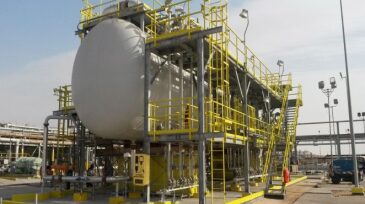
A pilot project demonstrates that facilities design plays an important role in providing sources of CO2 for the gas-handling process for injection into a carbonate formation as a tertiary recovery mechanism.
-
A demonstration project of carbon capture, utilization, and storage through enhanced oil recovery was conducted in Saudi Arabia. Surface facilities for such projects are expensive to build and involve tradeoffs in options based on economics for a given set of conditions.