Reservoir

As Egypt’s largest oil and gas investor, Eni is ramping up its 2026–2027 drilling campaign with new investments cross the Mediterranean offshore, Nile Delta, Western Desert, and offshore Sinai to strengthen the country’s role as a regional gas and LNG export hub.

The industry is no longer short of measurements; the real challenge is converting them into timely reservoir decisions that protect value. That challenge is becoming more urgent as the industry depends increasingly on mature fields and existing infrastructure. The selected papers show how this need is being addressed across different producing regions.

This paper presents a case study from a mature field redevelopment project where pulsed neutron logging was integrated with advanced reservoir modeling to improve the understanding of fluid-contact dynamics and optimize new horizontal well placement.
-
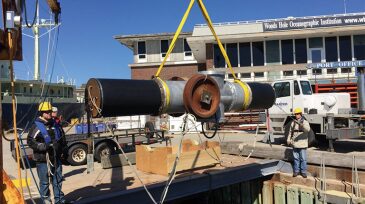
 Seismic innovators are working on new sound sources designed to produce better subsurface images while addressing concerns raised by scientists and regulators about the environmental impact of the related noise on sea life.
 -
A matured field is currently producing with greater than 85% water cut (WC) and has significant levels of uncertainty with respect to oil/water contact (OWC), flank structure, depth of spill points, production allocation, and residual oil saturation.
-
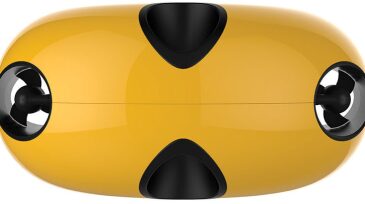
Autonomous Robotics’ first offering is built around a rounded yellow device that looks like a little flying saucer.
-
Rising demand for flowback technologies to reduce uncertainties is leading to the creation of more hydrocarbon and water tracers. These chemical-based tracers may play an important role in the shale industry’s effort to come up with more cost-effective fracture designs.
-
An area of great interest to those researching flowback is the interaction of water and salt inside the shale reservoir. After a well is stimulated, the flowback fluids tend to show a rising concentration of salt that falls back to near zero over time.
-
On the far end of the flowback spectrum is a completion process called soakback. If the well has to be shut in until takeaway capacity is available, the completion fluids soak into the shale rock. Flowback analysis can help understand what happens in the formation.
-
The need for cost and capital efficiency calls for careful integration of technical and commercial elements.
-
This paper will examine ways in which Chance of Development (CoD) can be defined better, methods for its estimation, and its appropriate application along with common misuses.
-
Researchers at Yale University who analyzed groundwater wells in the Marcellus Shale area have determined that hydraulic fracturing is highly unlikely to be a direct source of contamination.
-
A surge in earthquakes tightly clustered in southern Kansas that followed the large increase in produced water injections prompted the state to cut the daily limits on disposal wells in that area to see if that will help solve the problem.