Reservoir

The UAE project is expected to produce up to 345 MMscf/D by 2029, with expansion potential to 1 Bcf/D.

This study investigates the potential for in-situ hydrogen generation from hydrocarbons using in-situ combustion, with particular emphasis on the role of kerogen content and heating mode.

This paper presents the application of degradable particulate-diverter technology to improve oil production by effectively diverting stimulation treatment fluids away from high-water-cut, high-permeability, high-temperature producing intervals or zones.
-
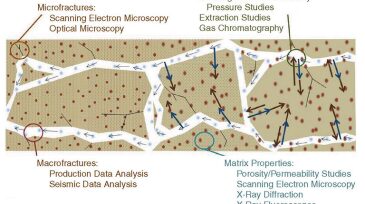
 The pursuit of sweet spots in unconventional oil and gas plays is driving the creation of an emerging set of data-driven systems to measure, map, and predict how wells will perform in unconventional reservoirs.
-
Permanent downhole gauges (PDGs) provide vast amounts of pressure-transient and rate data which may be interpreted with improved pressure-transient-analysis (PTA) approaches to gain more knowledge about reservoir dynamics.
-
The Bakken Petroleum System, which includes the Bakken and Three Forks shales in North America, is estimated to hold as much as 900 billion bbl of original oil in place.
-
This paper provides a more straightforward method for estimating stress-dependent permeability and capillary pressure in rock fractures.
-
At the recent 2015 Unconventional Resources Technology Conference, a major theme was how companies can improve performance without increasing the size of their budget.
-
The label unconventional oil and gas stubbornly hangs on because these formations cannot be understood using the rules of conventional petroleum engineering.
-
This paper focuses on the aspects of proppant selection and adequate fracture-conductivity placement, with the goal of improving well productivity and cumulative recovery.
-
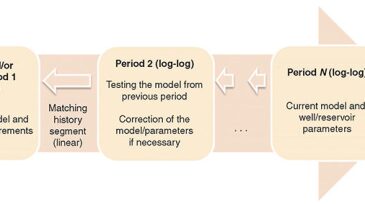
This paper proposes a framework based on proxies and rejection sampling (filtering) to perform multiple history-matching runs with a manageable number of reservoir simulations.
-
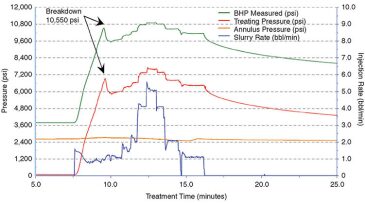
In hydraulic fracturing, the use of diagnostic-fracture-injection tests (DFITs) can provide valuable information.
-
The process of drilling a borehole is very complex, involving surface and downhole drilling systems that interact with the drilling fluid and the surrounding rocks.