Reservoir

As Egypt’s largest oil and gas investor, Eni is ramping up its 2026–2027 drilling campaign with new investments cross the Mediterranean offshore, Nile Delta, Western Desert, and offshore Sinai to strengthen the country’s role as a regional gas and LNG export hub.

The industry is no longer short of measurements; the real challenge is converting them into timely reservoir decisions that protect value. That challenge is becoming more urgent as the industry depends increasingly on mature fields and existing infrastructure. The selected papers show how this need is being addressed across different producing regions.

This paper presents a case study from a mature field redevelopment project where pulsed neutron logging was integrated with advanced reservoir modeling to improve the understanding of fluid-contact dynamics and optimize new horizontal well placement.
-
 Viper Energy is acquiring Sitio Royalties Corp. and its more than 25,000 net acres of royalty interests across major US shale plays.
 -
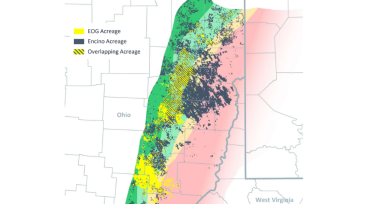
Extensive acreage overlap and existing operational collaboration drove the acquisition decision.
-
Best practices are not static; they evolve alongside advancements that redefine what is achievable.
-
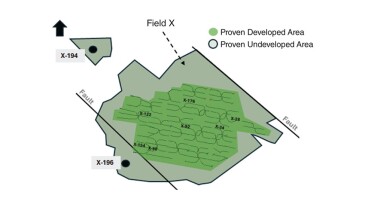
This study leverages oil-fingerprinting technology and geochemical data to evaluate the fluid connectivity between a main field and its stepout wells.
-
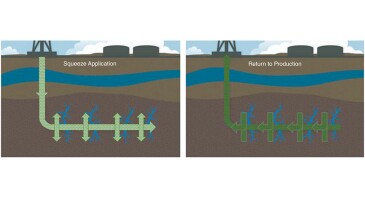
Data mining techniques are unlocking new insights from the performance of thousands of Bakken wells. This article explores how those insights are helping refine completion optimization.
-
This year’s Acidizing feature presents three SPE conference papers that discuss an important battlefront of enhanced production—carbonate reservoirs, those plays whose heterogeneity, reactivity, and flow behavior pose challenges that remain comparatively little-understood, despite the industry’s intensified efforts to maximize their output.
-
The three papers selected for this feature highlight some creative solutions that aim to increase project value by either increasing recovery or optimizing injectant cost, or both.
-
This paper discusses the effect of injected-polymer viscosity on various aspects of a project, from recovery to surface facilities, including both theoretical arguments and practical field experience—which do not always align.
-
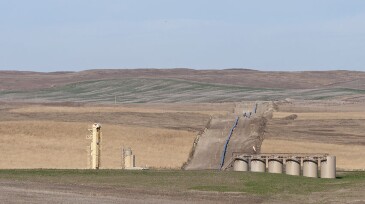
This paper provides details of a pilot study conducted on multiple wells, showcasing the potential of a novel biotechnology in Bakken enhanced oil recovery.
-
The authors of this paper describe a method of stimulating a multizone hydrocarbon-producing well wherein a tool is deployed downhole by wireline to generate acid vapor at a target depth, allowing each interval to be treated uniquely.