Reservoir

As Egypt’s largest oil and gas investor, Eni is ramping up its 2026–2027 drilling campaign with new investments cross the Mediterranean offshore, Nile Delta, Western Desert, and offshore Sinai to strengthen the country’s role as a regional gas and LNG export hub.

The industry is no longer short of measurements; the real challenge is converting them into timely reservoir decisions that protect value. That challenge is becoming more urgent as the industry depends increasingly on mature fields and existing infrastructure. The selected papers show how this need is being addressed across different producing regions.

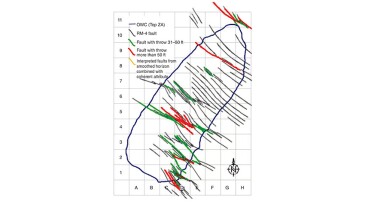
This paper presents a case study from a mature field redevelopment project where pulsed neutron logging was integrated with advanced reservoir modeling to improve the understanding of fluid-contact dynamics and optimize new horizontal well placement.
-
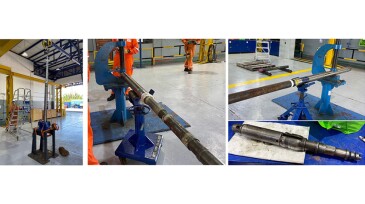
 This paper describes an optimized multizone single-trip gravel-pack system developed and implemented successfully in Brunei.
 -
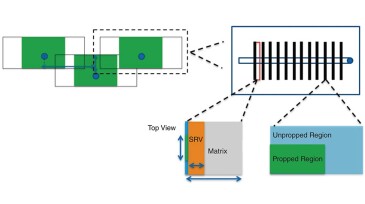
This paper describes the qualification of a multilayer, open-cell matrix polymer system for the first horizontal deployment in an offshore gas well.
-
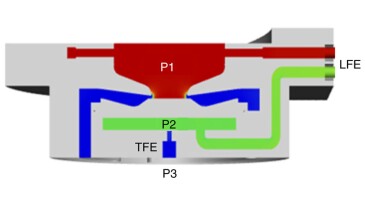
This paper describes installation of autonomous inflow control valves in the Bretaña Norte field in Peru, enabling effective water control even though the trial well was placed in the flank, close to the oil/water contact.
-
This paper presents a workflow that combines probabilistic modeling and deep-learning models trained on an ensemble of physics models to improve scalability and reliability for shale and tight-reservoir forecasting.
-
Shale Ingenuity’s first pilot used common natural gas liquids to boost daily output 30-fold from a low-producing horizontal well in Texas.
-
This paper discusses the approach used to sectorize a mature giant carbonate reservoir located onshore Abu Dhabi for the purposes of reservoir management, offtake, and injection balancing.
-
A new plan to secure electricity for the powerhouse of Texas oil and gas will cost billions of dollars to achieve.
-
New names and new deals continue to reshape the US shale sector.
-
This paper presents a novel modeling framework for predicting residual oil saturation in carbonate rocks. The proposed framework uses supervised machine learning models trained on data generated by pore-scale simulations and aims to supplement conventional coreflooding tests or serve as a tool for rapid residual oil saturation evaluation of a reservoir.
-
Join us on 17 September for the virtual launch event of the new SPE Integrated Reservoir Management Technical Section.