Reservoir

As Egypt’s largest oil and gas investor, Eni is ramping up its 2026–2027 drilling campaign with new investments cross the Mediterranean offshore, Nile Delta, Western Desert, and offshore Sinai to strengthen the country’s role as a regional gas and LNG export hub.

The industry is no longer short of measurements; the real challenge is converting them into timely reservoir decisions that protect value. That challenge is becoming more urgent as the industry depends increasingly on mature fields and existing infrastructure. The selected papers show how this need is being addressed across different producing regions.

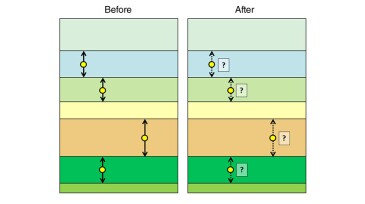
This paper presents a case study from a mature field redevelopment project where pulsed neutron logging was integrated with advanced reservoir modeling to improve the understanding of fluid-contact dynamics and optimize new horizontal well placement.
-
 Diamondback Energy has agreed to spin off its water operations. Now, who’s next?
 -
On a pro forma basis, the mineral and royalty arm of the Midland-based oil company owns interests covering more than 32,000 net acres in the Permian Basin.
-
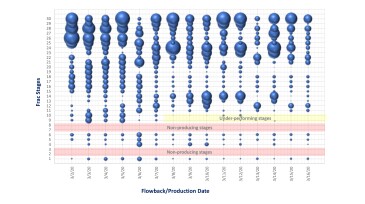
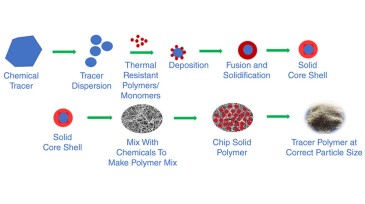
SponsoredThe data that comes with mapping flow behavior at the stage level of unconventional wells was once accessible only through the installation of costly and intrusive diagnostic methodologies like fiber optic or running production logging. New-generation FloTrac ultrahigh-resolution nanoparticle tracer technology with subatomic spectroscopic measurement techniques now de…
-
This paper sheds light on newer frontiers of tracer applications with unconventional uses to gain flow insights from an oil and gas reservoir.
-
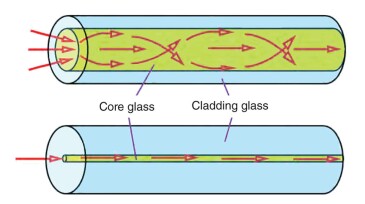
This paper presents a comprehensive technical review of applications of distributed acoustic sensing.
-
The authors of this paper analyze a robust, well-distributed parent/child well data set using a combination of available empirical data and numerical simulation outputs to develop a predictive machine-learning model.
-
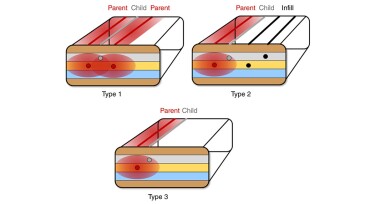
This paper summarizes a collaborative industry study to compare observations between shale-play data sets and basins, develop general insights into parent/child interactions, and provide customized economic optimization recommendations.
-
In this paper, example machine-learning models were trained using geologic, completion, and spacing parameters to predict production across the primary developed formations within the Midland Basin.
-
New studies are a reminder that the effort to identify, classify, and nullify frac hits remains paramount to the future of the unconventionals business.
-
The authors of this paper describe a technology built on a causation-based artificial intelligence framework designed to forewarn complex, hard-to-detect state changes in chemical, biological, and geological systems.