Reservoir

As Egypt’s largest oil and gas investor, Eni is ramping up its 2026–2027 drilling campaign with new investments cross the Mediterranean offshore, Nile Delta, Western Desert, and offshore Sinai to strengthen the country’s role as a regional gas and LNG export hub.

This paper presents an experiment investigating dissolution of basaltic primary minerals and conditions favorable for secondary phase formation under deep subsurface storage conditions.

This study aims to investigate the efficacy of chemical additives strontium chloride and barium hydroxide in accelerating CO₂ trapping mechanisms, their effect on dissolution of carbonate-bearing minerals, and resulting poroelastic changes in the host rock.
-
 The Sydney-based company announced it will also seek to exit all of its upstream permits with the exception of its major LNG joint venture.
 -
ADNOC awarded a new round of contracts to international service companies, intending to apply directional drilling and LWD to boost production by getting a better assessment of its reservoirs.
-
When Occidental Resources switched to bigger fracture designs to produce more oil, it produced more water as well. Based on research done since, they cannot have one without the other, and at the oil prices recently seen, that’s OK.
-
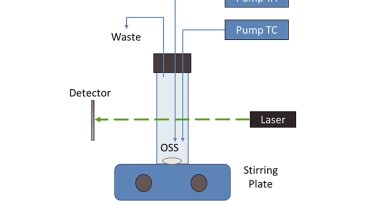
The authors of this paper develop an assay method to determine effective scale-inhibitor concentration.
-
The authors of this paper use a pattern-review technique in a complex brownfield as a tool to understand reservoir connectivity and dynamic fluid movements across the field.
-
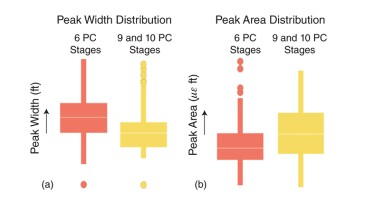
The authors of this paper describe a fiber-optic diagnostic method based on Rayleigh frequency shift that provides new insights about the characteristics of the near-wellbore region during production.
-
Glynn Williams, CEO of Silixa, offers his take on the role fiber-optic technology will play in the rise of CO2 storage and on the firm’s progress in the tight-rock sector.
-
This paper describes a novel distributed quasi-Newton derivative-free optimization method for reservoir-performance-optimization problems.
-
A North Dakota Supreme Court decision changed the rules for leasing pore space from landowners and their rights to compensation. This decision and the US Inflation Reduction Act, which significantly increases tax incentives for operators’ carbon capture and storage projects, is likely to spur other states to clarify their laws regulating pore space.
-
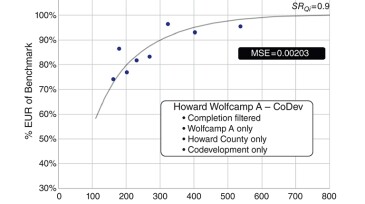
The complete paper builds on existing tools in the literature to quantify the effect of changing well spacing on well productivity for a given completion design, using a new, simple, intuitive empirical equation.