Reservoir

This paper discusses waterflooding and field-development implications of subsea seawater treatment for improved oil recovery.

This paper presents laboratory-testing methods and evaluation criteria designed to improve understanding of both the origin and extent of formation damage associated with CO2 injection.

This paper details the design and implementation of a subsea multiphase pump solution deployed in the Atlanta field designed to maximize reuse of existing subsea and topside equipment.
-
 Diversified Energy announces its largest deal yet to buy private equity-owned Maverick Natural Resources.
 -
A numerical simulation study based on experimental data of 2D and 3D models is presented to examine immiscible fingering during field-scale polymer-enhanced oil recovery.
-
This selection of cutting-edge articles spotlights how experimental concepts are now driving cost-saving strategies in unconventional development. It’s a reminder that innovation often comes from creative thinking, not just new tools or tech partnerships.
-
Rystad Energy and Wood Mackenzie highlight key factors shaping the balancing act in the upstream oil market.
-
Virtual reality and related visualization technologies are helping reshape how the industry views 3D data, makes decisions, and trains personnel.
-
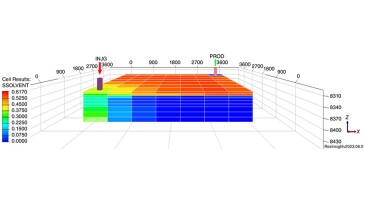
CO₂ enhanced oil recovery (EOR) provides an attractive and commercially established technique to store CO₂ underground. EOR modeling is crucial because complex simulation is required to predict the behavior of CO₂ and its interaction with the oil and reservoir rock.
-
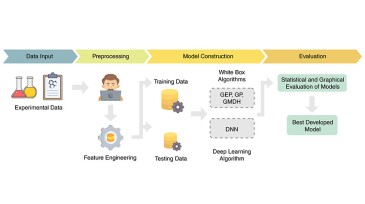
The objective of this study is to develop an explainable data-driven method using five different methods to create a model using a multidimensional data set with more than 700 rows of data for predicting minimum miscibility pressure.
-
The authors present an open-source framework for the development and evaluation of machine-learning-assisted data-driven models of CO₂ enhanced oil recovery processes to predict oil production and CO₂ retention.
-
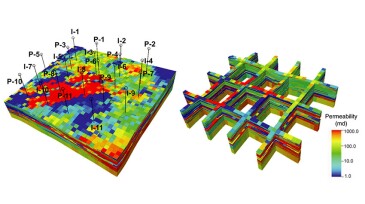
The authors of this paper propose hybrid models, combining machine learning and a physics-based approach, for rapid production forecasting and reservoir-connectivity characterization using routine injection or production and pressure data.
-
This polymer retention study examines temperature effect on an ATBS-based polymer, using single- and two-phase retention studies and different analytical methods in the presence and absence of oil.