Reservoir

Two new US Department of Energy funding programs focus on improving shale recovery, mitigating produced-water risks, managing sour gas, and enhancing facility efficiency.

This study demonstrates how routinely acquired downhole temperature data allows for direct estimation of fluid saturations and delivers more accurate reservoir volume assessments, particularly in aquifer-supported systems.

Sponsored
Effective data analysis depends on seeing connections that matter. Explore how Spotfire enables a more intuitive approach to understanding petroleum data.
-
 At more than $140 billion, M&A market activity in the fourth quarter delivered the best showing of the year.
 -
In its 2024 outlook, Enverus expects 3-mile-long lateral sections to become a new normal in the Permian and suggests the budding geothermal and lithium arenas may be the real deal.
-
Two of the most established US independents are combining to form a natural gas powerhouse that will be given a new name later this year.
-
Startup company LongPath Technologies has received conditional federal financing to install 1,000 methane detection towers spanning multiple US states.
-
Houston-based independents will combine to form a company with a production total above 500,000 BOE/D and valued at $21 billion.
-
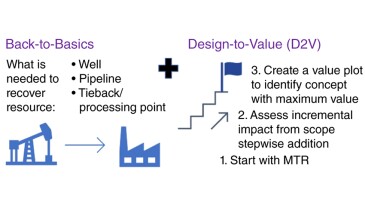
This paper describes a revamped methodology for field-development strategy formulation, particularly for marginal hydrocarbon resources, by shifting the mindset toward designing with an aim to value in order to improve project viability.
-
These papers underscore the industry’s shift toward more efficient practices, each contributing a crucial piece to the larger puzzle of EOR.
-
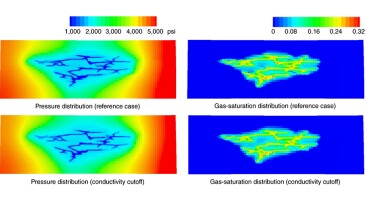
The authors of this paper present an advanced dual-porosity, dual-permeability (A-DPDK) work flow that leverages benefits of discrete fracture and DPDK modeling approaches.
-
This paper adds to ongoing research in hydrogen storage, focusing on efficient extraction of hydrogen to be stored potentially in depleted unconventional formations.
-
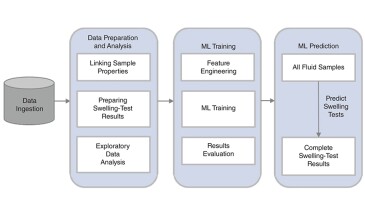
The authors of this paper present a machine-learning-based solution that predicts pertinent gas-injection studies from known fluid properties such as fluid composition and black-oil properties.