Reservoir

Two new US Department of Energy funding programs focus on improving shale recovery, mitigating produced-water risks, managing sour gas, and enhancing facility efficiency.

This study demonstrates how routinely acquired downhole temperature data allows for direct estimation of fluid saturations and delivers more accurate reservoir volume assessments, particularly in aquifer-supported systems.

Sponsored
Effective data analysis depends on seeing connections that matter. Explore how Spotfire enables a more intuitive approach to understanding petroleum data.
-
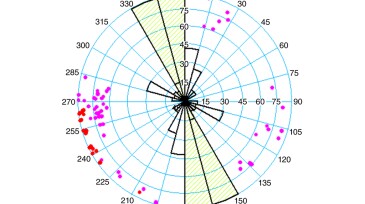
 This paper proposes a multidomain approach to tackle petrophysical and geomechanical aspects of a fracture system governing the carbonate layer of an exploration well in Kuwait to assess producibility and qualification for stimulation.
 -
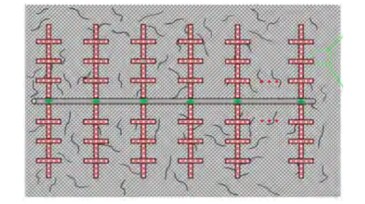
This paper proposes a data-driven proxy model to effectively forecast the production of horizontal wells with complex fracture networks in shales.
-
The trend in fracturing designs has been longer stages with more perforation clusters, which save time and money. But there are a couple of companies testing whether shorter is better for production.
-
Operators share emissions-mitigation research insights amid calls to accelerate to meet 2030 goals.
-
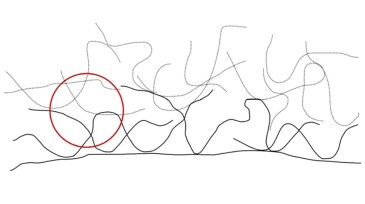
This paper describes a customized solution using a thixotropic organically crosslinked polymer as a treatment design for a subhydrostatic and highly aromatic offshore gas well.
-
Part 3 of this series looks at the importance of performance analysis and how to generate the economic benefit for solving conformance or sweep efficiency problems. The economic elements of this review are very basic, but they will help you to determine a more-accurate understanding of the true economic benefit.
-
SponsoredQuickly identifing the right strategies for a well or pad can overcome operational challenges. These cost-effective and easy-to-use solutions help operators achieve improved production rates with less manpower.
-
Geochemical parameters such as total organic carbon (TOC) provides valuable information to understand rock organic richness and maturity and, therefore, optimize hydrocarbon exploration. This article presents a novel work flow to predict continuous high-resolution TOC profiles using machine learning.
-
The US onshore business is looking flat at the moment, though these sorts of predictions are prone to sudden shifts.
-
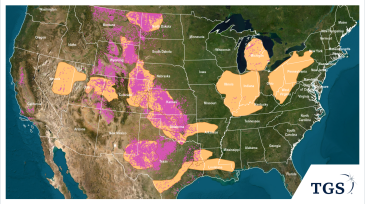
SponsoredIn a partnership with the American Institute of Formation Evaluation, TGS is now the only US data vendor offering report-sourced drillstem tests, available through TGS Well Data Analytics.