Reservoir

Two new US Department of Energy funding programs focus on improving shale recovery, mitigating produced-water risks, managing sour gas, and enhancing facility efficiency.

This study demonstrates how routinely acquired downhole temperature data allows for direct estimation of fluid saturations and delivers more accurate reservoir volume assessments, particularly in aquifer-supported systems.

Sponsored
Effective data analysis depends on seeing connections that matter. Explore how Spotfire enables a more intuitive approach to understanding petroleum data.
-
 Dos Caminos joint venture additions will be capable of delivering 2.0 Bcf/D of natural gas.
 -
Private-equity producer adds over 160,000 acres in Wyoming’s Powder River Basin oil play.
-
This paper describes a work flow that integrates data analysis, machine learning, and artificial intelligence to unlock the potential of large relative permeability databases.
-
As the demand for energy continues to increase, so does the sociopolitical demand that these resources be produced in a sustainable way. This reflective thought has defined this month’s selection of technical papers, each speaking to a different facet of this feature’s theme: unconventional reservoir development for a sustainable energy transition.
-
This paper describes natural fractures and their effect on hydrocarbon productivity in the Vaca Muerta shale formation.
-
The objective of this study was to establish an efficient optimization work flow to improve vertical and areal sweep in a sour-gas injection operation, thereby maximizing recovery under operation constraints.
-
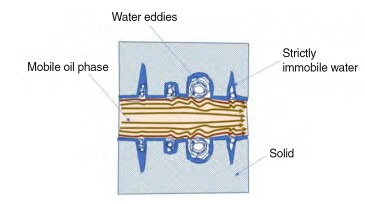
The objective of this paper is to present a fundamentals-based model of three-phase flow consistent with observation that avoids the pitfalls of conventional models such as Stone II or Baker’s three-phase permeability models.
-
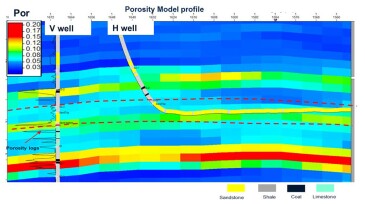
The authors of this paper describe a solution using machine-learning techniques to predict sandstone distribution and, to some extent, automate the process of optimizing well placement.
-
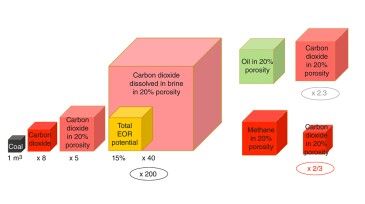
This study catalogs global gas/oil ratio data to identify currently produced light crude oils that could be rendered carbon neutral through the direct-air-capture mechanism.
-
A new program offers an affordable way to figure out if salt precipitation could be behind underperforming gas wells and suggests a path to higher production.