Reservoir
This study demonstrates how routinely acquired downhole temperature data allows for direct estimation of fluid saturations and delivers more accurate reservoir volume assessments, particularly in aquifer-supported systems.

Sponsored
Effective data analysis depends on seeing connections that matter. Explore how Spotfire enables a more intuitive approach to understanding petroleum data.

The deal adds over 1,000 potential drilling locations and almost doubles oil production for Houston-based Magnolia.
-
 Innovators at the Norwegian oil company have developed a machine-learning model that analyzes mud-gas data to predict the gas/oil ratio of wells as they are drilled—something that the industry has worked for decades to accomplish.
 -
As I reviewed all the SPE seismic papers this time, the most noticeable thing was the diversity of themes and case histories that were covered.
-
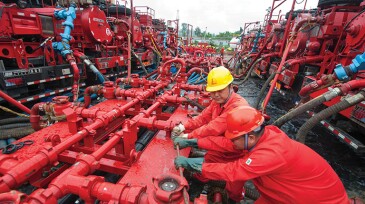
In striving to boost production of shale gas and tight oil, China is trying enhanced-hydraulic-fracturing technology and real-time data analysis in the Sichuan shale basin. In Daqing’s tight-oil fields, an alternative fracture-completion strategy and post-stimulation flowback technology has been tested.
-
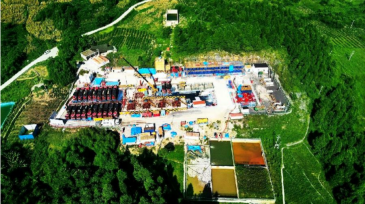
Sinopec is moving on to Phase 2 at its Weirong shale-gas development in Sichuan province after having completed Phase 1 by drilling 56 new wells over the past year and building new infrastructure to support increased natural gas production.
-
An investigation of casing damage led Chesapeake Energy and Well Data Labs to identify patterns in the treating pressure data that are useful markers when trouble is likely.
-
With only around 30 installations worldwide, ADNOC’s onshore team has seen enough results from its first “fishbone” stimulation to embark on a 10-well program that will decide a full development scheme.
-
In the complete paper, the authors present a novel approach that uses data-mining techniques on operations data of a complex mature oil field in the Gulf of Suez that is currently being waterflooded.
-
The complete paper aims to identify the role of different geological settings with different types of fluid saturations in the response of EM-wave propagation and absorption.
-
In the complete paper, the authors generate a model by using an artificial-neural-network (ANN) technique to predict both capillary pressure and relative permeability from resistivity.
-
Eni and IBM developed a cognitive engine exploiting a deep-learning approach to scan documents, searching for basin geology concepts and extracting information about petroleum system elements.