Reservoir

This paper aims to establish a set of best practices for generating particle-size-distribution data from core samples.

This paper discusses the successful execution of two openhole gravel-pack completions in two Gulf of Mexico fields with depleted reservoirs.

By integrating experimental and mathematical modeling approaches, this work aims to advance the understanding of sand-detachment dynamics and formation instability under varying saturation conditions.
-
 This paper describes a hydraulic fracturing pilot project using a technique that generates higher fracture conductivity to reduce the drawdown during production and improve connection through laminations.
 -
This paper presents a case study of a North African oil field producing from two Ordovician sands with differing permeabilities where significant benefit was achieved by fracture stimulating one or both intervals in two wells.
-
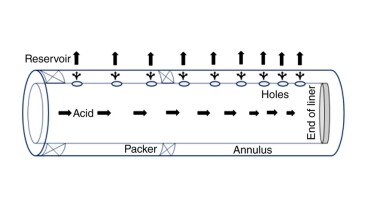
This paper describes the stimulation of a horizontal water-injection well with a limited-entry-liner completion in an onshore carbonate reservoir using a large volume of viscoelastic diverter-acid fluid system ahead of the main acid stage.
-
This paper details a successful pilot to improve long-term well performance using acid stimulation aided by a tailored metal oxide nanoparticle-based fluid in the Wolfcamp A formation.
-
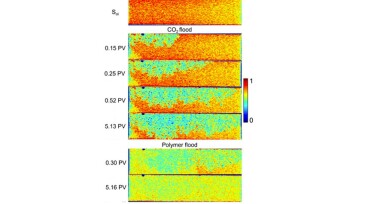
In this paper, the authors propose polymer-assisted water-alternating-gas (WAG) injection as an alternative method to reduce gas mobility while reducing the mobility of the aqueous phase and, consequently, improving WAG performance.
-
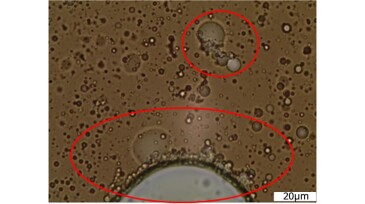
The authors of this paper study the effect of solids particles on oil/water separators and on produced-water treatment.
-
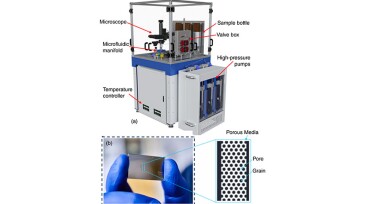
The authors present an efficient microfluidic platform to measure high-quality minimum miscibility pressure data of CO2 with various impurities faster and easier.
-
This study introduces a detailed model to capture the physics and chemistry of acid flow in complex horizontal wells completed in carbonate formations.
-
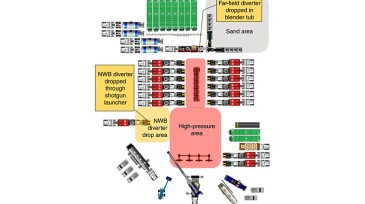
The authors of this paper describe a project in which far-field diverters were pumped to mitigate wellbore sanding and production loss in existing parent wells.
-
The EOR scene has evolved as well. Low-salinity waterflooding, originally thought to apply only in certain sandstone reservoirs, appears to be able to unlock additional reserves also for some carbonate formations, although the fundamental mechanisms are different.