Reservoir

This paper documents the testing, integration, and field deployment of a metal expandable packer used as an openhole toe isolation plug in a deepwater well under high-pressure, high-temperature conditions.

Three papers are highlighted as the primary contributions because of their broad industry relevance. They focus on improving formation particle-size characterization, expanding the application of openhole gravel packs in depleted and compartmentalized reservoirs, and advancing the understanding of capillary pressure in sand production.

This paper aims to establish a set of best practices for generating particle-size-distribution data from core samples.
-
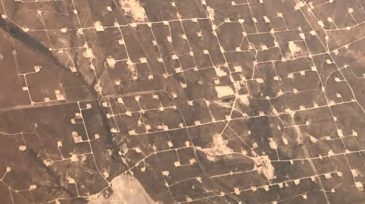
 Permian producers are looking for new places and ways to sustain production in the giant basin.
 -
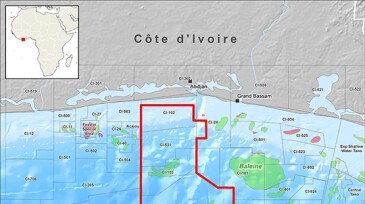
The project aims to reimage a 6,400-km2 seismic data set near the recently discovered Baleine field.
-
The latest deal from Denver-based Civitas Resources brings its spending total this year to almost $7 billion.
-
The authors of this paper describe a procedure that enables fast reconstruction of the entire production data set with multiple missing sections in different variables.
-
This paper presents a physics-assisted deep-learning model to facilitate transfer learning in unconventional reservoirs by integrating the complementary strengths of physics-based and data-driven predictive models.
-
The authors of this paper present an artificial-lift timing and selection work flow using a hybrid data-driven and physics-based approach that incorporates routinely available pressure/volume/temperature, rate, and pressure information.
-
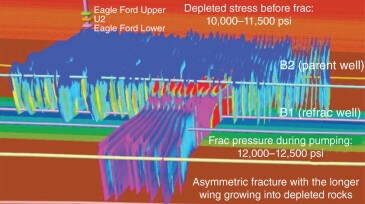
This paper focuses on characterization of fracture hits in the Eagle Ford, methods to predict their effects on production, and mitigation techniques.
-
As production dynamics evolve over the full life cycle of a tight-oil play, a single artificial lift method may not be the most cost-effective solution.
-
SponsoredWhat are we, in the upstream oilfield service companies, doing about it? The Middle East upstream oil and gas industry is shifting its focus to unconventional and tight-gas resource development.
-
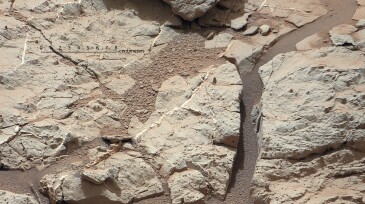
The natural fractures discovered on Mars during rover missions might be so important that they are worth bringing back to Earth.