Reservoir

Three papers are highlighted as the primary contributions because of their broad industry relevance. They focus on improving formation particle-size characterization, expanding the application of openhole gravel packs in depleted and compartmentalized reservoirs, and advancing the understanding of capillary pressure in sand production.

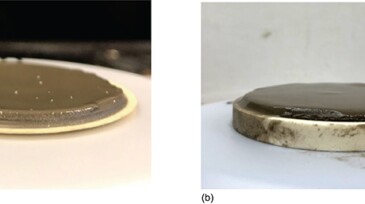
This paper aims to establish a set of best practices for generating particle-size-distribution data from core samples.

This paper discusses the successful execution of two openhole gravel-pack completions in two Gulf of Mexico fields with depleted reservoirs.
-
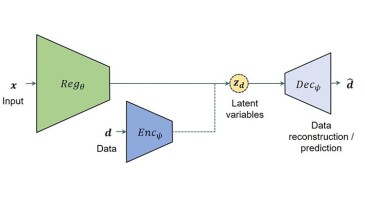
 The authors discuss the development of a deep-learning model to identify errors in simulation-based performance prediction in unconventional reservoirs.
 -
The authors of this paper compare case studies from the Bakken and the STACK plays to conclude that mineralogy, petrophysics, and reservoir-condition differences between basins cause differences in the effect of fracture-driven interactions.
-
This paper shares details of 2 years of monitoring the first commingled updip smart water injector drilled in the Piltun area of the Piltun-Astokhskoye offshore oil and gas field.
-
In this second part of a two-part series on advances in artificial lift, we’ll look at the state of optimization and a trio of techniques and technologies under development or new to the market. Look for quarterly reviews of specific types of lift in upcoming issues in the new year.
-
This paper describes a high-density high-pressure/high-temperature brine-based drilling fluid that provides long-term stability and solids-suspension properties for extended periods of time.
-
Understanding the injected-water preferential paths is a key aspect of waterflood optimization in reservoirs characterized by strong vertical and areal heterogeneities. Devising specific work flows for such applications is important.
-
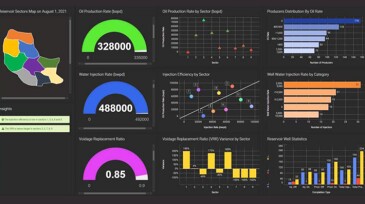
This paper discusses a waterflood optimization system that provides monitoring and surveillance dashboards with artificial-intelligence and machine-learning components to generate and assess insights into waterflood operational efficiency.
-
A leaner and wiser Weatherford seeks new Middle East contracts while growing margins and market share on existing business.
-
Billionaire-founder boosts his original offer made in June to secure the deal.
-
ADNOC is hiring more jackup drilling rigs to boost offshore production of its more carbon-friendly brand of crude.