Reservoir

Three papers are highlighted as the primary contributions because of their broad industry relevance. They focus on improving formation particle-size characterization, expanding the application of openhole gravel packs in depleted and compartmentalized reservoirs, and advancing the understanding of capillary pressure in sand production.

This paper aims to establish a set of best practices for generating particle-size-distribution data from core samples.

This paper discusses the successful execution of two openhole gravel-pack completions in two Gulf of Mexico fields with depleted reservoirs.
-
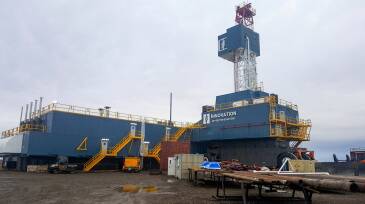
 The future of the heavy-oil business in Alaska looks more promising than ever after a 2-year pilot delivers technical and economic success.
 -
The Permian Basin operator said the purchase translates to more than a decade of additional inventory.
-
In this first part of a two-part series, we look at how the artificial-lift sector has adapted to producing unconventional resources. The second part of the series to publish in November will crack open the lift toolbox to take a deeper look at the techniques and technologies under development or new to the market.
-
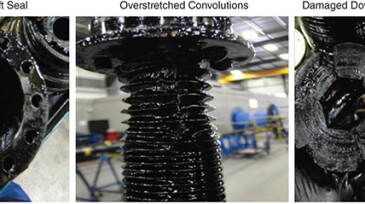
The paper presents successful field tests designed to decrease electrical-submersible-pump cooling rates by inducing controlled deadheads rather than shutting down the pumps.
-
Founded by former analytics experts for a large US independent, Xecta Digital Labs is proposing a new analysis method for horizontal wells. Adopting it means turning the page on some old habits.
-
This paper presents agile technologies that integrate data management, data-quality assessment, and predictive machine learning to maximize asset value using underused legacy core data.
-
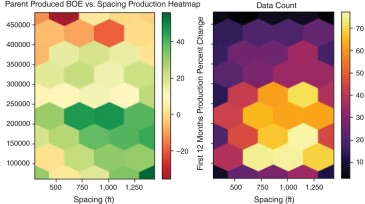
The authors write that child-well performance increases with spacing and decreases with infill timing and that the parent cumulative production at child-well completion is an effective indicator of child-well performance.
-
The paper presents results of single-phase and multiphase electrical-submersible-pump tests as well as operation data, lessons learned, and failure examples gathered over 10 years of operation in a highly viscous offshore oilfield.
-
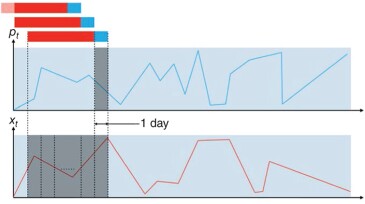
The authors of this paper propose a novel approach to data-driven modeling for transient production of oil wells.
-
Injecting gas plus water proved more effective and less costly than gas-only injection in the Bakken.