Reservoir

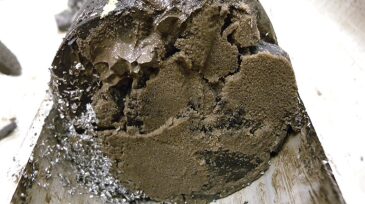
This paper aims to establish a set of best practices for generating particle-size-distribution data from core samples.

This paper discusses the successful execution of two openhole gravel-pack completions in two Gulf of Mexico fields with depleted reservoirs.

This study explores the carbon-capture and mineralization potential of ultramafic rock powders when exposed to flue gases generated from combustion of crude oil and mesquite-derived charcoal.
-
 The paper evaluates the effect of different injection methods on oil recovery and CO2 storage potential in a depleted sandstone reservoir in the Norwegian Continental Shelf.
 -
Our industry has been the custodian of subterranean reservoirs. We are the experts in managing and developing them. Why not use that expertise to find solutions for climate change by capturing and removing carbon and being part of the solution?
-
Case studies demonstrate how an autonomous outflow-control device prevents growth and excessive fluid injection into thief/fracture zones and maintains a balanced or prescribed injection distribution.
-
This paper presents recent results from a rigorous pilot-scale demonstration of natural-gas foam over a range of operating scenarios relevant to surface and bottomhole conditions with a variety of base-fluid mixtures.
-
The complete paper reviews the history of enhanced oil recovery and the Scurry Area Canyon Reef Operators Committee, discusses changes in theory over time, and provides a look at the field’s future.
-
The authors demonstrate how reservoir management and operational strategies can be used to optimize CO2 storage and oil recovery.
-
Hydrochloric acid continues to be the most effective and low-cost material for carbonate stimulation. Though exotic chemistries such as chelating agents and organic acids have been promoted for being less corrosive at high temperatures, the cost and dissolving capacity limit their use to large-scale implementation. The ability to inhibit the corrosion tendency of hydr…
-
Using validated models, the authors provide a comparative analysis to determine the advantages of using natural gas foams relative to conventionally used slickwater, linear gel, and crosslinked fluid.
-
A lot has been learned about shale, but those working to eke out oil from that ultratight rock still extract more value from data than physics.
-
Physics-based simulations plus machine-learning exercises are yielding a more comprehensive look at production volumes from unconventional assets.